PIPE FITTINGS
Threaded fittings repair traditional air mains
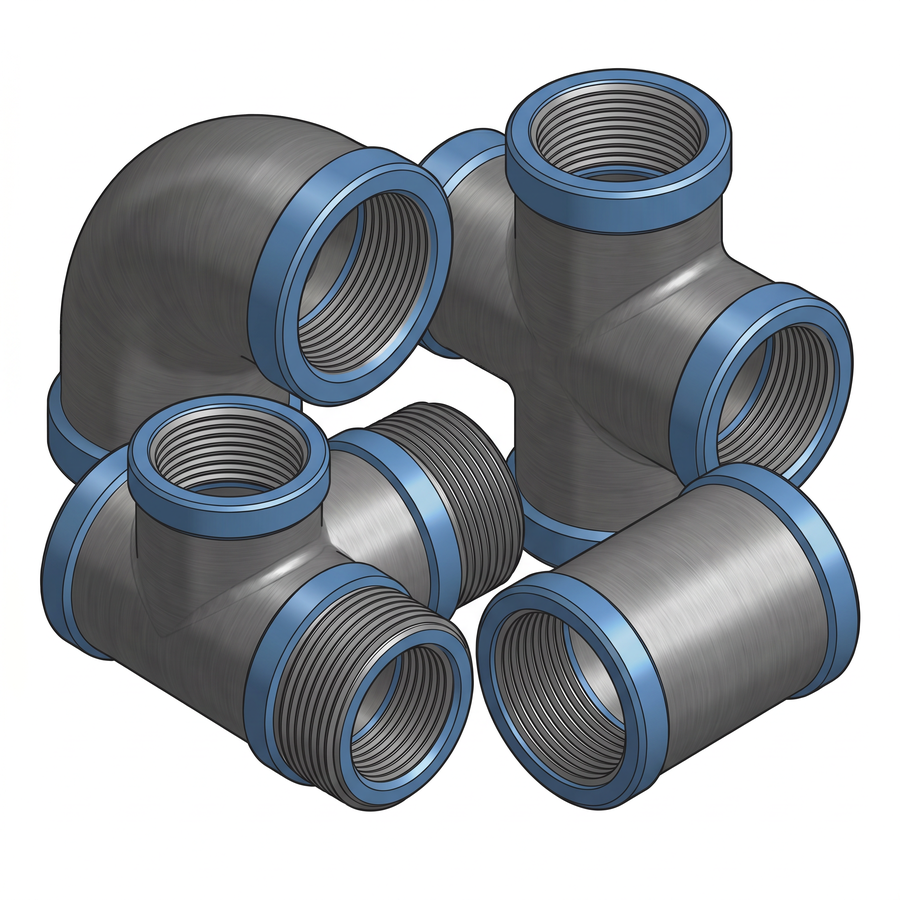
Steel and galvanized fittings are the elbows, tees, couplings, reducers, and nipples used on iron-pipe compressed-air runs.

Black and galvanized NPT pipe fittings: the threaded elbows, tees, couplings, nipples, and reducers that build and repair traditional iron-pipe air mains and drops. The legacy distribution method modular aluminum piping is pitched against, and the fittings a service house still r…
Tap any type to jump to its page. The Decision Guide further down asks three questions that funnel the spec to one of these.
Steel and galvanized fittings are the elbows, tees, couplings, reducers, and nipples used on iron-pipe compressed-air runs.
Thread type, size, material, and schedule matter more than preference when the customer is repairing an existing run.
If the job is a new main or large retrofit, compare threaded labor against modular aluminum before quoting only fittings.
Distributor-facing reading. The trade-off column is the one that closes the loop — every type buys something and gives something up. Knowing what each type costs you is how the right one gets on the quote without a callback.
Draw a line from the customer's answer at the top to the type name at the bottom. This is the page distributors screenshot and send to a customer the day before a quote call — so the customer comes prepared with the answers, and the call is about the brand and the budget, not the basics.
Distribution & Conveyance is where leaks, pressure drop, corrosion, and repair speed show up. The right answer depends on whether the customer is building new, repairing legacy pipe, or upgrading to a cleaner modular system.
Tell us the end-use, the rough flow, and what climate the unit would sit in. We'll come back with a configured quote — the right type, the right tier, and the upstream gear the warranty assumes.
Start with the family, then add the quote inputs you know. Unknown specs stay open for SPC to confirm.
Your quote. We reply within one business day with pricing, lead-time, and configured parts.