DISTRIBUTOR-FIRST SUPPLY PARTNER · SINCE 1999 Live · Compressed Air System

SPC Company
Compressed Air / Control / Compressor Control Valves / Unloader Valve
Layer 05 · Control Value · Conrader
What it is

Unloader Valve

Compare tiers ↓

An unloader valve is a signal-actuated vent on a compressor's discharge side that opens the cylinder head or separator tank to atmosphere. On reciprocating compressors it serves the startup-bypass function: it holds the head open to atmosphere during motor start, so the motor accelerates against zero backpressure, then closes once the motor reaches operating speed. On continuous-run rotary-screw compressors it serves the load/unload capacity-control function: when the control panel commands unload, the unloader dumps the separator tank to near-zero pressure so the air-end spins against no resistance, drawing parasitic horsepower only. The unloader is one of the highest-wear parts on a compressor, actuates on every load/unload cycle, hundreds of thousands of cycles per year, and is selected by cross-referencing the OEM compressor make, model, and HP to an equivalent aftermarket part number. The defining variant choice is standalone signal-actuated vs. piloted combination unit (integrated unloader + pilot + discharge check), with piloted combination units carrying a factory-set pilot pressure band that is field-adjustable within limits.
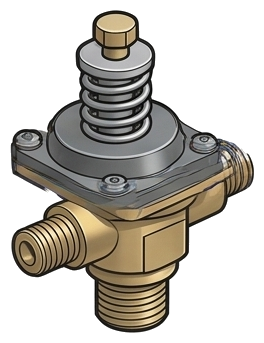
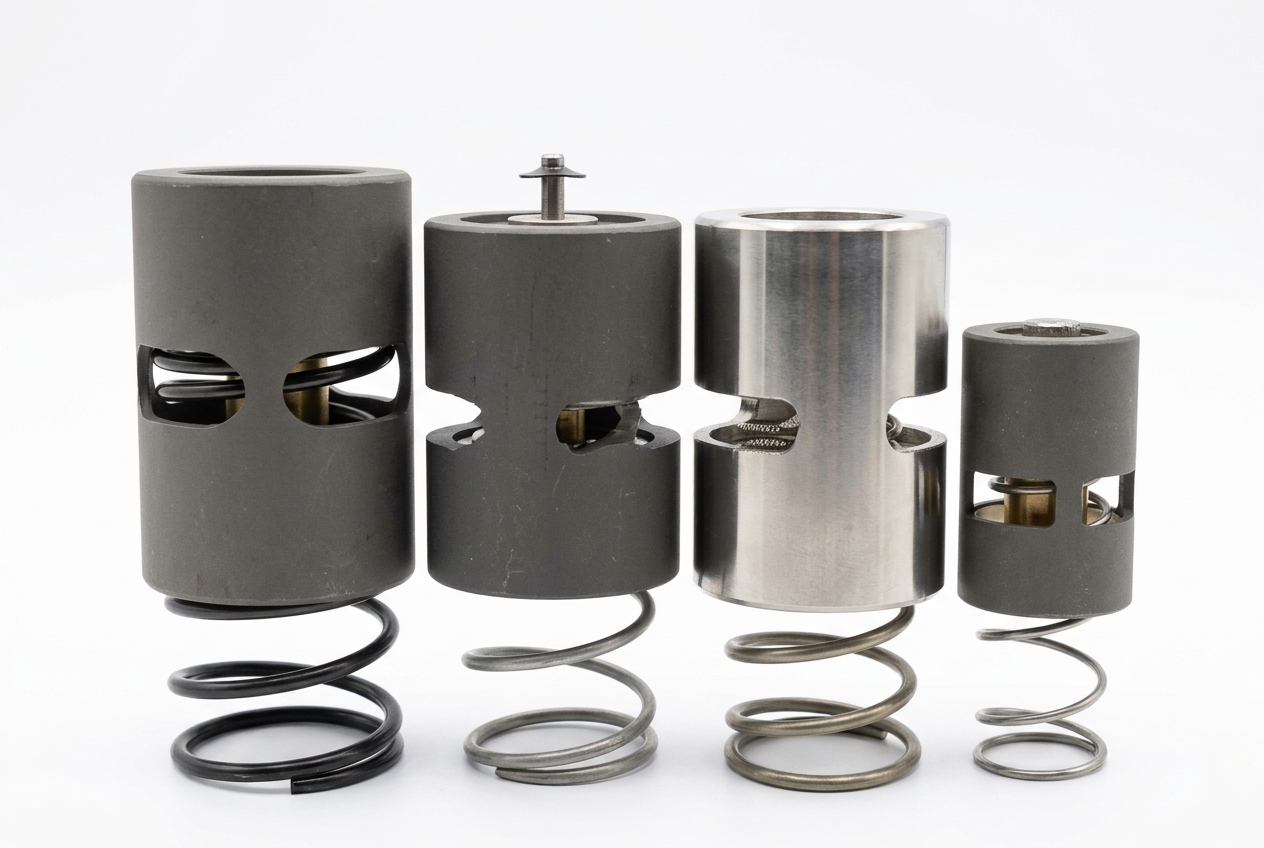
Pictorial Representative unloader valve
Unloader Valve — representative illustration
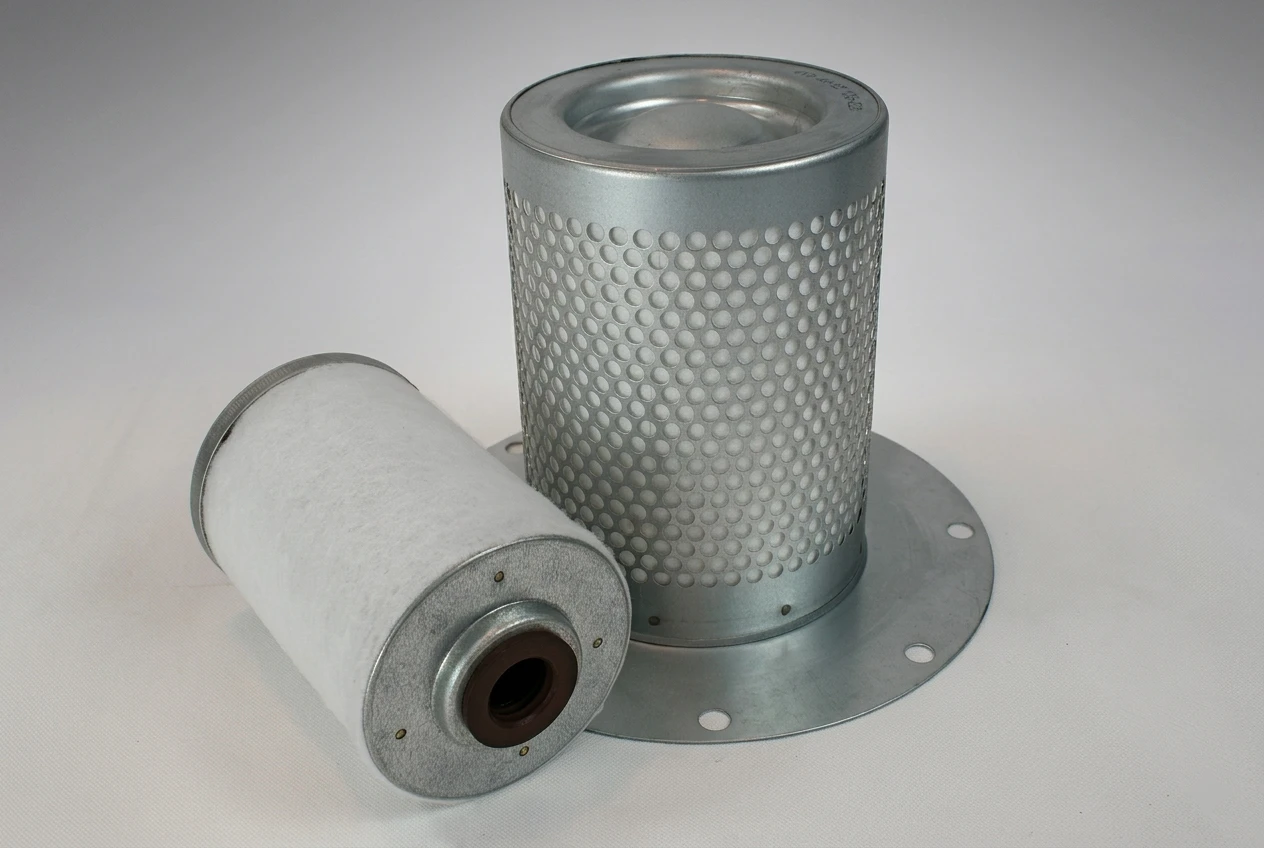
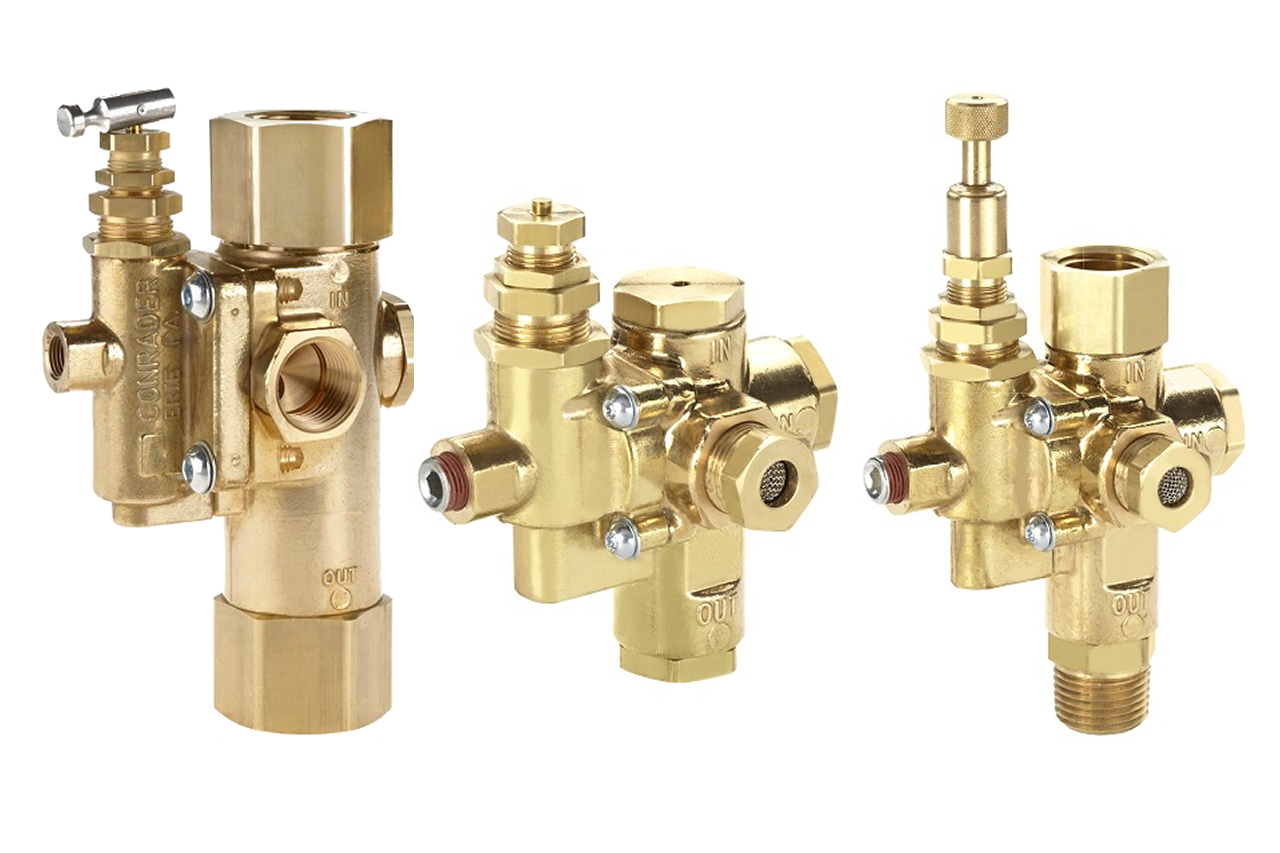
Real-world reference Representative unloader valve
Unloader Valve — representative product photo
Why it's needed

Why this matters.

When the unloader is the right call, and when the symptom belongs to the pilot or a different valve. Review the points below.

01 · Key point
It vents at the discharge side.

Normally-closed signal-actuated valve that dumps the separator tank or cylinder head to atmosphere on command, drops separator pressure from ~125 PSI to near-zero in seconds so the air-end keeps spinning but produces no air.

02 · Key point
It cuts unload draw to 25-35 kW.

On a 100 HP fixed-speed screw, an unloaded air-end pulls only the parasitic 25-35 kW to overcome friction vs. the full ~90 kW at load. Stuck-closed unloader spikes electric bills 50-100%: the highest-payback aftermarket parts sale on a compressor.

03 · Key point
It enables zero-backpressure motor start.

On reciprocating compressors, holds the head open during the motor start so the rotor accelerates against atmosphere, keeps the motor inside its 6-10 starts/hour envelope. Failed startup-bypass trips the overload every cycle.

04 · Pro tip
Confirm standalone vs. combination first.

Standalone signal-actuated unloaders cross to a different part number than piloted combination units (unloader + pilot + discharge check in one body). Combination units carry a factory-set pilot band, commonly 110-135 PSI or 120-150 PSI, field-adjustable within limits. Mismatched bands shift the entire cut-in/cut-out behavior.

05 · Where not to use
"Won't unload" before isolating the pilot.

No exhaust attempt at the unloader vent on a commanded unload = pilot or signal failure, not the unloader body. → Re-spec to the pilot valve or solenoid: replacing a healthy unloader leaves the customer with the same symptom.

06 · Where not to use
"Running hot" without verifying load state.

Hot-running can be a stuck-closed unloader (running full-load 24/7) or a stuck-bypassed thermostatic, different parts. → Re-spec to the thermostatic valve if the unloader cycles cleanly and motor current drops on unload command.

07 · Where not to use
No-name imports on production machines.

Partial seal failure 3-6 months in costs more in continuous blowdown losses than any savings on the part. → Re-spec to Industry Leader tier: brass-body construction, full pilot-band variants, proven cross-reference catalog.

Key selection criteria

What we need to spec it right.

From the machine spec sheet to the part number. Answer what you know, leave the rest blank, and send.

04Choose your priority  ·  core differentiator

Whatever your lever — performance, value, or price — SPC has the right brand.

Pick the priority; the quote desk handles the cross-reference.

02 Value 1 brand
Where it's used

Industries served.

Each industry below uses this product across the listed areas. Open an industry to see how it fits the rest of its system.

Also applies to Fixed-speed lubricated rotary-screw compressors, 25-200 HP plant range · hundreds of thousands of cycles per year · Reciprocating compressors, small-to-mid range · 5 HP through large industrial recips · Continuous-run reciprocating compressors · Compressors using piloted combination unloader/check units · Aging installed-base compressors with high cycle counts · 10-20+ years old · Compressors with documented energy spikes or runaway run-time · immediate verifiable energy savings · Compressors with audible blowdown leaks at the cabinet vent · Multi-machine fleets on service-route agreements

Install · 5 critical steps

The things that matter on the first install.

Step 02
Depressurize fully and lock out
Stop the compressor, vent the receiver and separator tank to 0 PSI, lock and tag the electrical disconnect. The unloader is on the discharge side and sees full system pressure when the compressor is loaded, opening it pressurized is a serious injury risk. Wait for safe handling temperature before proceeding.
Step 03
Mark and disconnect signal/pilot connections
Photograph and mark the pilot air line, solenoid wiring (if signal-actuated), and any pilot pressure adjustment for combination units. On combination units, note the current pilot pressure setpoint, the replacement may arrive at factory default and need to be adjusted to match the original band. Cap pilot line ends to keep debris out.
Step 04
Remove the old unloader and inspect adjacent components
Loosen the body fittings or mounting bolts; on threaded NPT (National Pipe Thread Tapered) connections use a backing wrench on the manifold side to avoid stressing adjacent plumbing. Inspect the discharge piping, separator tank port, and (on combination units) the integrated check valve seat for varnish, debris, or corrosion. Clean threads or gasket faces thoroughly before installing the new unloader.
Step 05
Install the new unloader and reconnect signal lines per photos
Use thread sealant rated for compressor service on NPT connections; do not use PTFE tape alone on hot oil-laden compressor discharge (it can flake into the air-end). Hand-tighten to engagement, then torque to spec. For mounting-flange unloaders, use the supplied gasket and torque bolts in a star pattern. Verify the body orientation matches the OEM configuration so the exhaust vents in a safe direction. Reconnect the pilot air line and solenoid wiring per the photos. For combination units, adjust the pilot band to match the original setpoint using the field adjustment screw.
Step 06
Bench-test, restart, observe two full load/unload cycles, document
With the compressor still locked out, manually apply pilot pressure to the unloader (shop air on the pilot port, or energize the solenoid via the control panel) and verify the unloader opens to atmosphere. Release the pilot signal and verify the unloader closes and seals (no audible leak). A unit that doesn't cycle freely or doesn't seal under bench test will fail in service. Remove lockout, restart, and watch through at least two complete load/unload cycles: vent loudly on unload, silent and sealed on load, motor current drops cleanly from full-load to unload. Document install date, part number, OEM cross, pilot pressure setting (combination units), and next bundled-service date.
Troubleshoot · top failures

Most returns trace to one of these causes.

Symptom
Most likely cause
Fix
Compressor will not unload, runs at full motor load continuously even when system pressure is at or above cut-out.
Unloader stuck closed (debris in the seat, failed return spring, varnished pilot piston), control solenoid burnt out or stuck de-energized, pilot air line plugged or kinked, or load/unload control logic not commanding unload.
Isolate signal vs. body failure first. Listen at the unloader exhaust on a commanded unload. No exhaust attempt = signal isn't reaching the unloader (solenoid, pilot air line, or pilot valve). Exhaust attempt but the unloader doesn't open fully = body is sticking, replace with cross-reference. Quote the corresponding part once isolated.
Compressor will not load, continuous loud hissing or roaring at the unloader exhaust port, system pressure stays low or zero.
Unloader stuck open (debris wedged in seat, failed seal elastomer, broken return spring), pilot signal stuck in unload command (solenoid stuck energized, pilot failed open), or, on combination units, the integrated check valve has failed open as well, letting the entire system back-bleed.
Quote the cross-reference unloader as the primary fix. If the unit is a combination unloader/pilot/check assembly, replace the whole assembly, individual sub-components inside combination units are rarely serviceable. Verify pilot signal returns to "load" state once the new unit is installed.
Compressor short-cycles or builds pressure unevenly, with intermittent audible hissing at the unloader.
Partial seal failure on the unloader body; the unit is leaking continuously when it should be sealed, so the compressor cycles more aggressively to compensate. Less commonly: pilot valve is bouncing between load and unload signals due to a worn pilot diaphragm.
At full load, listen carefully at the unloader exhaust port. Any audible leak from the exhaust during the loaded state confirms the unloader body. Quote the cross-reference; the partial-failure mode is the most expensive long-term because the customer pays for the leakage continuously.
Reciprocating compressor trips motor overload protection at startup.
Failed unloader startup-bypass function, the unloader isn't venting the discharge to atmosphere during the motor start, so the motor tries to accelerate against full stored system pressure and exceeds its starting-current envelope.
Confirm by manually bleeding system pressure to 0 PSI before a start attempt, if the compressor starts cleanly with zero stored pressure but trips with stored pressure, the startup-bypass is failed. Quote the cross-reference replacement. Verify the motor and overload settings haven't drifted before assuming the unloader is the only fault.
Compressor unloads correctly but will not return to load when system pressure drops to cut-in.
Unloader stuck open after the unload cycle, won't reseal when the pilot signal returns to load command. Often a debris-wedged seat or a failed return spring inside the body.
Quote the cross-reference. On a single-direction failure like this (unloads fine but won't reload), the unloader body is almost always the part, pilots rarely fail in only one direction.
New aftermarket unloader installed but compressor symptom returned within weeks.
Wrong cross-reference (correct OEM model match but wrong year-of-manufacture or wrong standalone-vs-combination configuration), pilot pressure band not adjusted to match original on combination units, control signal wiring reversed during reinstall, or the actual root cause was the pilot valve.
Verify the cross against the compressor's serial number and confirm the configuration. Check pilot pressure setting on combination units against the documented original. Verify pilot/solenoid wiring against install photos. If all three check out, replace the pilot valve as the next service.

Get the right unloader valve on quote in 24 hours.

Send us the application — a specialist routes you to the correct tier with a configured part. Lead-times and pricing returned within one business day.

Open quote engine ↑