DISTRIBUTOR-FIRST SUPPLY PARTNER · SINCE 1999 Live · Compressed Air System

SPC Company
Compressed Air / Storage / Air Receiver Tanks / Portable Air Tank
Layer 03 · Storage Performance · Manchester Tank
What it is

Portable Air Tank

Compare tiers ↓

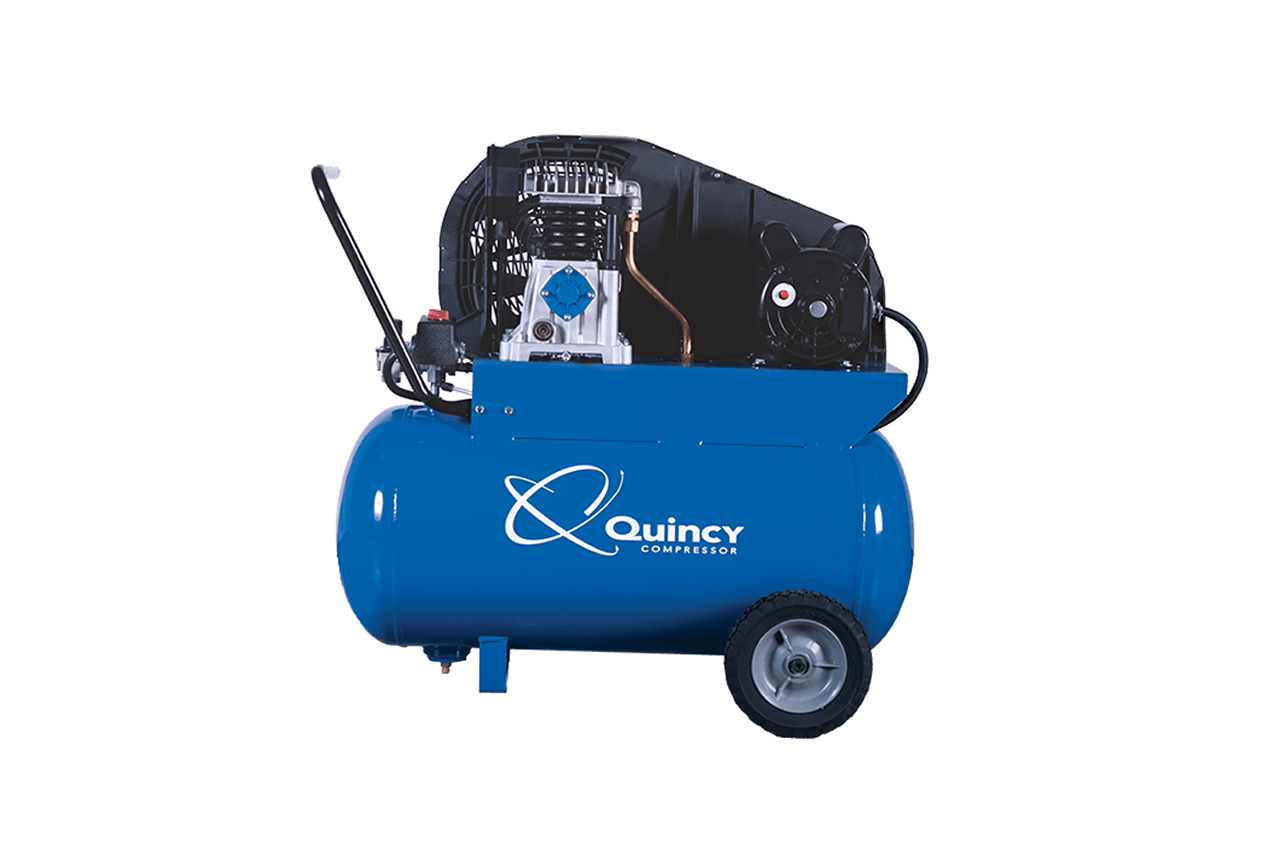
A portable air tank is a small, mobile ASME (American Society of Mechanical Engineers) Section VIII Division 1 air receiver built to move with the work, used on construction sites, in service trucks, and at satellite work cells where a fixed compressor-room tank is not practical. It does the same core job as a stationary receiver: stores a reservoir of compressed air to buffer demand, dampens portable-compressor pulsations, and steadies the pressure tools see. The difference is form, not function; the body is compact and transport-oriented (wheeled cart, skid-frame with forklift pockets, or trailer-mount) so it can be carried to the job rather than anchored in a compressor room.
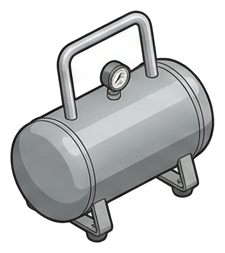
Pictorial Representative portable air tank
Portable Air Tank — representative illustration
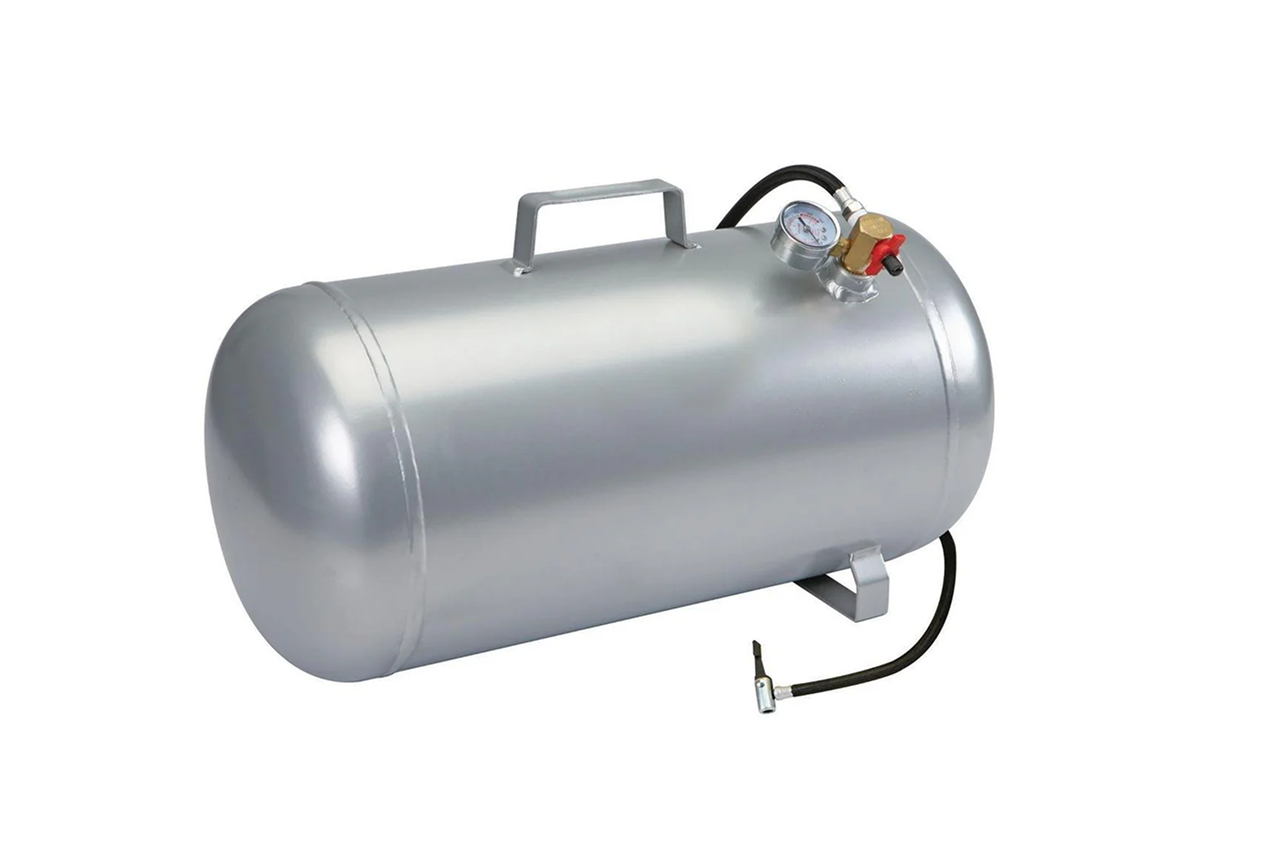
Real-world reference Representative portable air tank
Portable Air Tank — representative product photo
Why it's needed

Why this matters.

When mobile beats fixed, and when fixed beats mobile. Review the points below.

01 · Key point
Storage at the point of use.

A 100-foot run of 3/4-inch hose at 100 PSI flowing 30 CFM drops 8-12 PSI by the time it reaches the tool. A portable at the work area releases stored air immediately at full pressure; the painter sees steady 90 PSI at the gun.

02 · Key point
Same code, different body.

Mobile form factor, ASME Section VIII Div 1 coded, U-stamped, and National Board registered: same code basis as a 1,060-gallon plant tank. The body moves; the code obligations don't.

03 · Key point
Doubles portable-compressor storage.

Contractor compressors routinely ship with 20-30 gal integral tanks too small for their CFM, causing short-cycling. A standalone 60-80 gal portable alongside the compressor doubles effective storage without a bigger machine.

04 · Pro tip
Match form factor to how it moves.

Three distinct SKUs: wheeled cart for shop/indoor service, skid-frame with forklift pockets for industrial yard service, trailer-mount for over-the-road service. A wheeled cart on a gravel site is unusable; a trailer in a 4,000 sq ft shop is overkill.

05 · Where not to use
Permanent continuous demand.

Continuous use at a fixed satellite location, fixed piping plus a stationary tank wins on cost-per-CFM and uptime. Portable is the wrong answer when the work doesn't move. → Re-spec to fixed piping plus vertical-receiver-tank.

06 · Where not to use
Unwinterized outdoor service.

Frozen condensate inside a pressure vessel can crack the lower head or distort the shell; a single freeze can total the tank. → Re-spec to heat-traced drain line or operator-routine end-of-day manual drain before specifying for year-round outdoor use.

07 · Where not to use
High-volume plant storage.

Portables top out at the 30-120 gallon band, undersized for compressor-room buffering above small contractor compressors. → Re-spec to vertical-receiver-tank for stationary plant storage or horizontal-receiver-tank for low-ceiling rooms.

Key selection criteria

What we need to spec it right.

From the machine spec sheet to the part number. Answer what you know, leave the rest blank, and send.

04Choose your priority  ·  core differentiator

Whatever your lever — performance, value, or price — SPC has the right brand.

Pick the priority; the quote desk handles the cross-reference.

01 Performance 1 brand
Where it's used

Industries served.

Each industry below uses this product across the listed areas. Open an industry to see how it fits the rest of its system.

Also applies to Auto-body and paint shops · The painter sees steady pressure at the gun, which directly improves finish quality. · Mobile maintenance and service trucks · SPC supplies fleet operators by the unit and by stocking arrangement. · Light-industrial satellite air supply · Emergency / standby portable air supply

Install · 6 critical steps

The things that matter on the first install.

Step 01
Confirm the use case and form factor before ordering
Wheeled cart for shop/indoor service, skid-frame with forklift pockets for industrial yard service, trailer-mount for over-the-road service. Three distinct stocking SKUs. A wheeled cart on a gravel construction site is unusable; a trailer-mount in a 4,000-square-foot shop is overkill. Match the form factor to how the customer will actually move and use the tank.
Step 02
Verify the code package on arrival
Even on portables, the U-stamp nameplate must be present, legible, and not obstructed by frame welds or paint. National Board number must be recorded. Manufacturer's data report (or abbreviated documentation for portable vessels) must accompany the tank. Reject any portable that arrives without legible code stamps: the documentation is the entire legal basis for operating the vessel above 15 PSI.
Step 03
Install the ASME safety relief valve
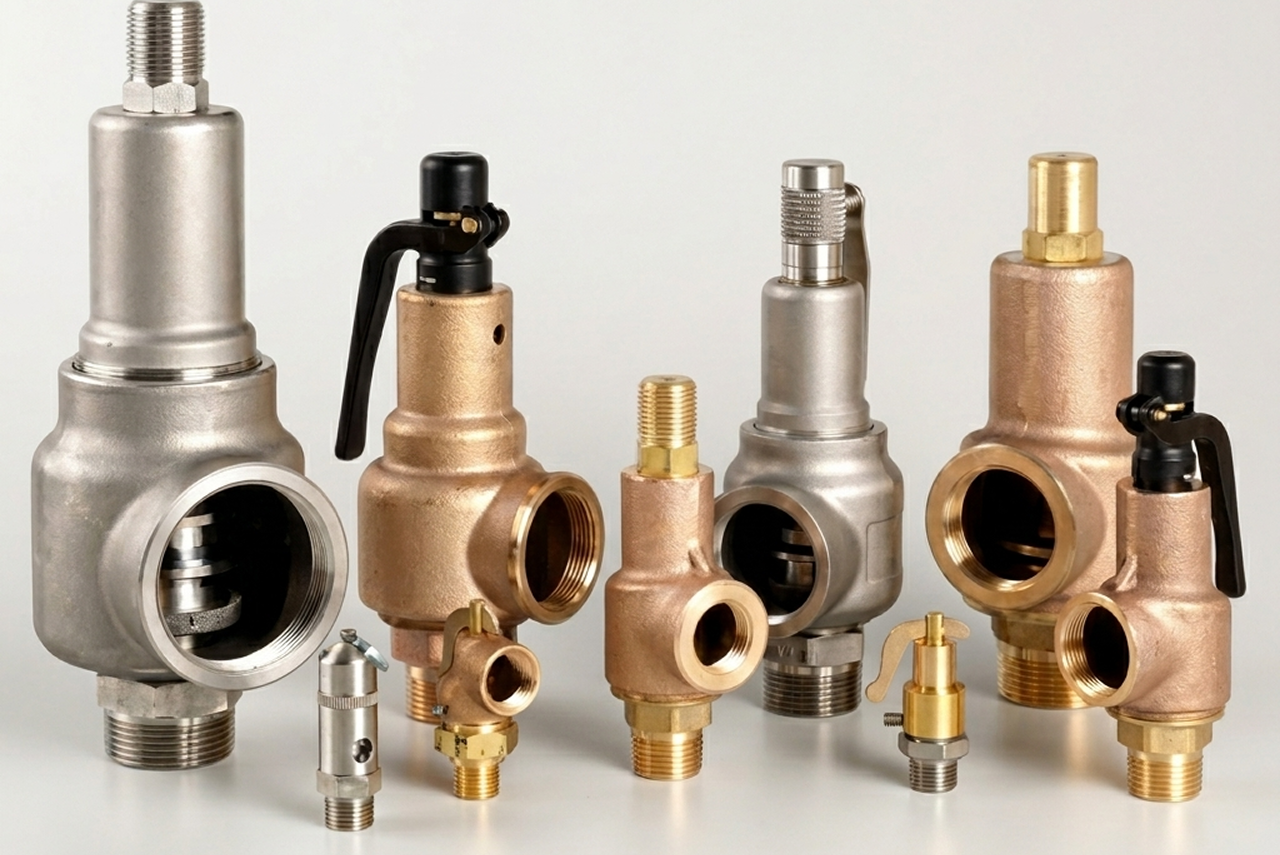
Code-mandated, sized to the tank's MAWP, sized for SCFM (Standard Cubic Feet per Minute) capacity to match or exceed the feeding compressor. Mount on the dedicated safety port, top of tank, on its own boss, never on a tee or branch. Verify discharge direction is safe, portables move, and a vent that points toward an operator in one orientation may not be safe in another. Some installs use a flexible discharge stinger to direct the vent away regardless of tank orientation.
Step 04
Mount inlet and outlet quick-couplers (industrial or safety style)
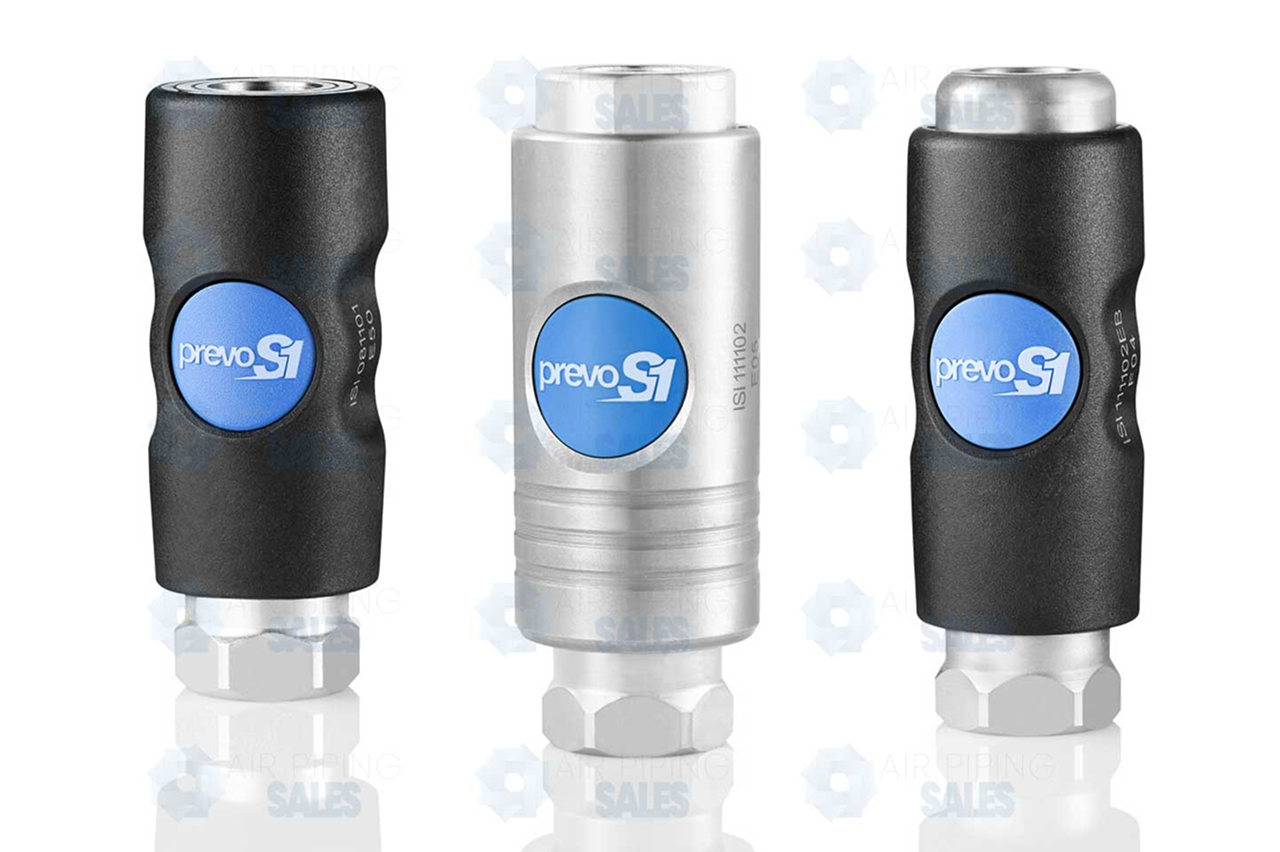
Match the customer's tool fittings, industrial-style most common for general shop use, OSHA safety-bleed required at tool-side connections per OSHA 1910.243. Use matched plugs at the compressor-side hose connection; ensure couplers are rated for the working pressure (typically 200+ PSI rated for a 150 PSI system).
Step 05
Install the condensate drain
Manual ball-valve at the lowest point is acceptable on operator-attended portables; the operator can be relied upon to open it at end of day in a way they cannot on a stationary tank. Zero-air-loss electronic drain required where the tank is unattended or in continuous-duty service. In winterized service, install heat-trace on the drain line or route the low-spot to prevent standing water from freezing.
Step 06
Mount a pressure gauge and pressure-test the install
Glycerin-filled 2.5-inch outlet gauge shows the operator the available pressure. Optional FRL (Filter-Regulator-Lubricator) or standalone regulator lets the operator adjust delivered pressure for different tools (90 PSI impact, 30-50 PSI paint) without affecting tank storage pressure. Bring the portable up to operating pressure from the feeding compressor, soap-check every joint, and verify the safety relief valve doesn't lift during normal operation.
Troubleshoot · top failures

Most returns trace to one of these causes.

Symptom
Most likely cause
Fix
Portable tank loses pressure overnight or between uses
Quick-coupler not properly seated (most common, operator unhooked but didn't verify the disconnect sealed), drain valve leaking past (corroded ball seat or worn O-ring), safety relief valve leaking through, or slow leak at an inlet/outlet fitting.
Soap-check every fitting first. Test the drain by closing it firmly and watching for bubble formation around the valve handle. Test the relief valve by checking around the discharge port for soap-bubble leakage. Most overnight leaks are quick-coupler related and resolved by replacing a worn coupler.
Customer reports tools dropping pressure when the trigger holds for more than a few seconds
Tank too small for the customer's demand pattern (portable capacity insufficient to cover the surge before the compressor catches up), compressor itself undersized, blocked or restricted hose/coupler upstream of the tool, or worn tool internals demanding more air than rated.
Check that the portable is appropriately sized, a 30-gallon tank feeding a 25-CFM grinder will drop pressure on long trigger holds regardless of how good the tank is. Verify the hose ID and quick-coupler size are not the restriction: a 1/4-inch coupler on a 3/4-inch hose throttles the air. If sizing and plumbing are correct, the tool itself may need service.
ASME safety relief valve lifts during normal operation
Compressor cut-out pressure set above the valve's rated setpoint (most common, operator turned up the compressor's pressure switch without recognizing the portable's relief-valve limit), wrong-rated valve installed (lower PSI than tank MAWP), or valve damaged from rough transport.
Verify the compressor's cut-out is below the portable's relief-valve setpoint and the tank MAWP. If the valve is damaged, replace with a fresh ASME-rated valve sized to MAWP. Never adjust or disable an ASME safety relief valve. If the customer needs higher operating pressure than the existing portable allows, they need a higher-MAWP portable, not a different relief valve.
Frozen drain or frozen condensate inside the portable during winter outdoor service
Manual drain not opened at end of day (water accumulated, then froze in the drain line or shell bottom), drain line not heat-traced, or tank stored outdoors without freeze-protection.
Thaw safely with warm water on the drain area, never open flame on a pressure vessel. Once thawed, drain fully and assess shell damage; freeze expansion can crack the lower head or distort the shell. Future practice: install a zero-air-loss electronic drain with drain-line heat-trace, or retrain the operator to open the manual drain at end of every day in winter. A single freeze can total the tank.
Tank exterior shows surface rust, especially on the underside of horizontal portables
Tank stored outdoors without weather protection, condensate accumulating on the underside (gravity-low point in horizontal layout), paint failure exposing carbon steel, or drain not being opened daily.
Surface rust on a portable is usually exterior-cosmetic and can be wire-brushed and repainted with a compatible primer. If the rust is on the underside or near the drain port, schedule an ultrasonic thickness test: internal corrosion shows externally last. Portables on outdoor rental service typically need shell inspection every 5-7 years.
Tank drains air loudly when the operator opens the drain at end of day
Operator forgot to close the inlet quick-coupler before draining, drain orifice oversized for the tank's working pressure, or drain valve seated incompletely.
Train the operator to close the inlet quick-coupler first, then open the drain slowly. Sudden full-flow drains of pressurized air through a manual valve can damage the seat and create personnel-safety risk (loose objects or condensate spray). Replace any valve that doesn't seat fully closed.

Get the right portable air tank on quote in 24 hours.

Send us the application — a specialist routes you to the correct tier with a configured part. Lead-times and pricing returned within one business day.

Open quote engine ↑