DISTRIBUTOR-FIRST SUPPLY PARTNER · SINCE 1999 Live · Product System

SPC Company
Value · Sang-A
What it is

PTC Hand Valve

Compare tiers ↓

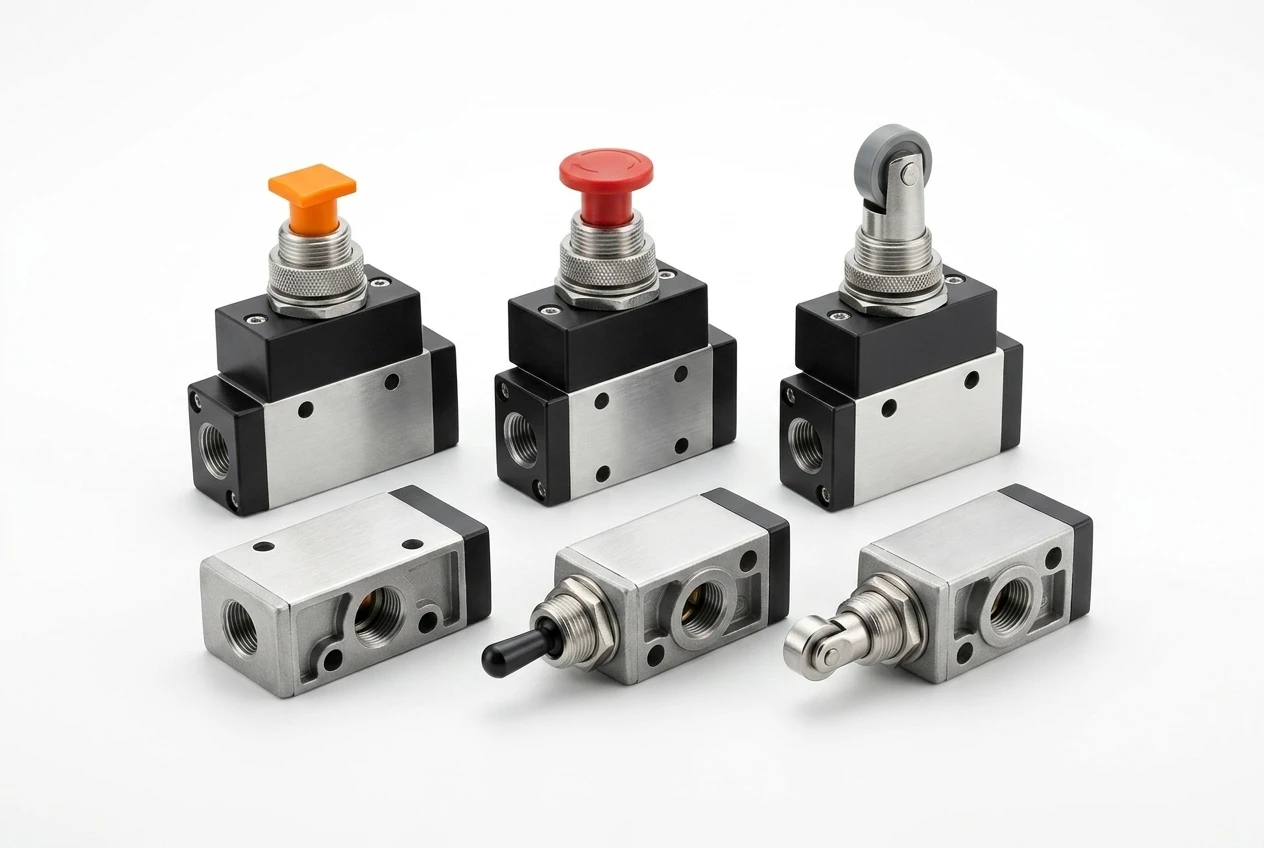
A hand valve is a compact, hand-actuated (lever or slide) manual valve installed at the workstation so an operator can turn an air line on or off locally: at the point of use, by hand, without walking back to a panel or breaker. The standard version is a 3-way directional valve, and that is what makes it more than a tap: in the OFF position it blocks the inlet and discharges the residual downstream pressure to atmosphere, so the tool, cylinder, or fixture on the outlet side is left fully depressurized, safe to adjust, clear, or repair. It is the cheapest way to put a safe-state OFF at every drop. A 2-way variant also exists for the cases where you must NOT vent, reservoir tanks and vacuum-pipe lines, closing the path without bleeding what is held. It installs inline on the same tube OD (the outside diameter of the air line) as the machine's push-to-connect fittings, sized to the drop it controls.
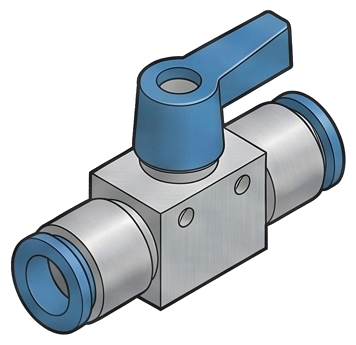
Pictorial Representative ptc hand valve
PTC Hand Valve — representative illustration
Where it's used General Manufacturing
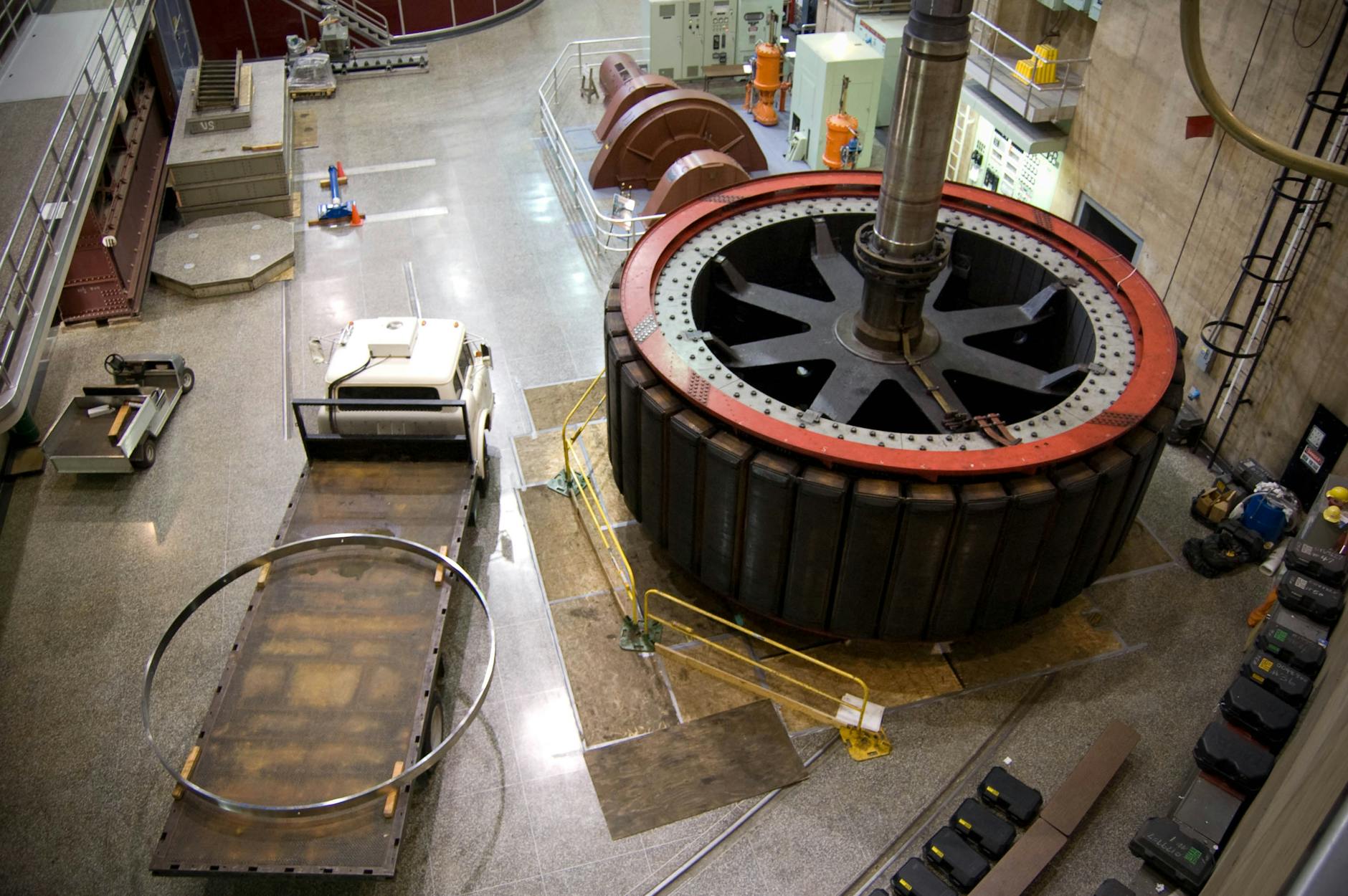
General Manufacturing application
Why it's needed

Why this matters.

When the hand valve is the right call, and which actuation and porting to spec. Review the points below.

01 · Key point
Local on/off, by hand, at the drop.

A lever or slide the operator throws at the workstation, no panel, no solenoid, no signal. The simplest way to give every tool, fixture, or test station its own manual shutoff right where the work happens. A few dollars, installs in seconds on the existing tube OD.

02 · Key point · safety vent
OFF discharges the downstream to atmosphere.

The standard 3-way build shuts off supply; in OFF it blocks the inlet AND vents the residual outlet pressure to atmosphere. The downstream device is left fully depressurized, so a tool change, bowl service, or fixture adjustment happens on a dead line: not on trapped pressure. That is the difference between a tap and a safe-state shutoff.

03 · Key point
Shuts off supply and depressurizes for repair.

Trapped downstream air is what makes a "closed" line still dangerous; a clamp can release, a cylinder can creep, a fitting can spit when broken. Because the 3-way bleeds the outlet, the operator gets a vented, zero-pressure downstream every time the lever goes to OFF. The safe behavior is automatic, not a separate step someone has to remember.

04 · Pro tip · 3-way vs 2-way
Pick porting by "must it vent or must it hold?"

Default to the 3-way when the operator needs the downstream device safely vented in OFF, the workstation and maintenance case, which is most of them. Switch to the 2-way only when venting is wrong: reservoir/accumulator tanks and vacuum-pipe lines that must hold their charge. A 2-way on a tool drop leaves trapped pressure; a 3-way on a vacuum line dumps the vacuum. Match the build to the job.

05 · Where not to use
Lockable LOTO isolation.

A hand valve is a quick local on/off; it is not a padlockable lockout point. → Re-spec to quarter-turn shutoff valve when the job is OSHA lockout-tagout at a branch or machine drop. The shutoff''s lever has the padlock hole; the hand valve does not. Different jobs, one is operator convenience, the other is documented isolation.

06 · Where not to use
Automatic or remote actuation.

A hand valve only moves when a hand moves it, no electrical signal, no cycle-timed switching. → Re-spec to solenoid valve when the line must switch on an electrical command, on a PLC cycle, or from a remote panel. The hand valve is for deliberate, local, human on/off.

07 · Where not to use
Tunable flow throttling.

The hand valve is on/off (with the OFF-vent on the 3-way); it is not built to meter a partial flow, and a partial-open position is not a repeatable setting. → Re-spec to flow control or a speed controller when the job is throttling line flow or cylinder speed rather than turning the line on and off.

Key selection criteria

What we need to spec it right.

From the machine spec sheet to the part number. Answer what you know, leave the rest blank, and send.

04Choose your priority  ·  core differentiator

Whatever your lever — performance, value, or price — SPC has the right brand.

Pick the priority; the quote desk handles the cross-reference.

02 Value 1 brand
Where it's used

Industries served.

Each industry below uses this product across the listed areas. Open an industry to see how it fits the rest of its system.

Also applies to Maintenance and service isolation at the device · Reservoir and accumulator tanks (2-way) · Vacuum-pipe lines (2-way) · Blow-off and purge stations · Test and calibration rigs

Install · 5 critical steps

The things that matter on the first install.

Step 01
Confirm 3-way vs 2-way against the function BEFORE plumbing
A 3-way has three ports, inlet, outlet, and an exhaust port that vents the downstream to atmosphere in OFF. A 2-way has only inlet and outlet and never vents. Putting a 2-way where a vent is wanted leaves trapped downstream pressure; putting a 3-way on a reservoir or vacuum line bleeds the charge. Verify the port count matches the intended behavior at the bench, not after it is plumbed in.
Step 02
Plumb inlet and outlet to the body markings; leave the exhaust port clear
Inlet from the supply side, outlet to the tool/fixture/device. On the 3-way, the exhaust port must vent freely to atmosphere, do not cap it, do not plumb it into a manifold under pressure, or the OFF-vent function is defeated and the downstream stays pressurized. A muffler on the exhaust port is fine (quiets the discharge) as long as it does not restrict the vent.
Step 03
Match tube OD and thread, and seal by thread type
The PTC ends must match the machine's tube OD exactly; confirm the tubing size before install. Threaded ports are R (BSPT) taper or G (BSPP) parallel, BSPT/R seals on the thread (PTFE tape, 2-3 wraps, in the direction of engagement; threads are Teflon-treated from the factory but tape the field joint anyway), BSPP/G seals on the face with an O-ring or bonded washer, NO tape on the thread.
Step 04
Orient the actuator for clear operator reach
The lever or slide must be reachable and its OFF position obvious from the operator's normal stance, no ladder, no reaching past moving equipment. Most bodies can be rotated within the pipe threads before final tightening; set orientation before locking the joint. For slide valves, verify the push/pull travel is not blocked by adjacent equipment.
Step 05
Commission within the rated envelope and verify the OFF-vent
Working pressure is 0–284 psi (0–1958 kPa); the 2-way build also handles negative pressure to −14.5 psi (−100 kPa) for vacuum-pipe service. Temperature range 32–176°F (0–80°C), AIR only. After install, throw the valve to OFF and confirm the downstream gauge drops to zero (3-way), that proves the exhaust path is clear and the safe-state works. On a 2-way, confirm the downstream holds.
Troubleshoot · top failures

Most returns trace to one of these causes.

Symptom
Most likely cause
Fix
Downstream stays pressurized after the valve is set to OFF
A 2-way valve installed where a 3-way (venting) build was needed: the 2-way blocks the inlet but has no exhaust path, so trapped outlet pressure remains. OR a 3-way with its exhaust port capped, plumbed into a pressurized manifold, or blocked by a clogged muffler.
Confirm the part is a 3-way (count the ports, three, with an exhaust). If it is a 2-way, swap to a 3-way for venting service. If it is a 3-way, clear the exhaust port, uncap it, route it to atmosphere, or replace a fouled muffler.
Air bleeds continuously from the exhaust port with the valve ON
Internal spool/poppet seal leaking (worn NBR O-ring, particulate damage), OR the valve is stuck mid-position between ON and OFF.
Cycle the actuator fully through both positions a few times; a partial throw can leave both paths cracked. If it still bleeds in the full ON position, the internal seal is leaking; the valve is generally not field-rebuildable at this price point, replace, and service the upstream filter if particulate is the cause.
Lever or slide sticks, is stiff, or won't reach full travel
Corrosion or mineral scale from contaminated air, install-time debris in the body, OR mechanical damage from using the actuator as a leverage/hand-hold.
Work the actuator gently through several partial cycles to free it. If it frees, the valve is usable in low-criticality service but schedule replacement. If not, replace. Do not force a stuck actuator with tools; a cracked spool is a sealing and contamination hazard. Address upstream air quality if it recurs.
Vacuum line won't hold / loses vacuum through the valve
A 3-way installed on a line that must hold: its exhaust port bleeds the vacuum (or the reservoir charge) to atmosphere in OFF. OR a 2-way with a damaged seat passing through.
For reservoir/vacuum-hold service, the part must be a 2-way (no exhaust port). Swap if a 3-way was installed. If it is already a 2-way and still leaks, the seat is damaged, replace.
Thread joint leaks at the port
Wrong sealing method for the thread form, BSPT/R (taper) sealed without tape, or BSPP/G (parallel) sealed with tape instead of a face seal. OR over-temperature/over-pressure beyond the 284 psi / 176°F envelope degrading the joint.
Re-seal by thread type, R = PTFE tape on the thread, G = O-ring/bonded washer on the face, no tape. Confirm the system operates within 0–284 psi and 32–176°F; sustained over-spec service damages seals and tubing.

Get the right ptc hand valve on quote in 24 hours.

Send us the application — a specialist routes you to the correct tier with a configured part. Lead-times and pricing returned within one business day.

Open quote engine ↑