DISTRIBUTOR-FIRST SUPPLY PARTNER · SINCE 1999 Live · Pneumatic Automation System

SPC Company
Pneumatic Automation / Control & Valving / Manual & Shutoff Valves / 1/4-Turn Shutoff Valve
What it is

1/4-Turn Shutoff Valve

A 1/4-turn shutoff valve is a point-of-use ball valve installed upstream of an FRL (filter-regulator-lubricator) or machine drop so a service tech can isolate the line in less than a second for filter-bowl service, regulator replacement, or tool change, without bleeding the whole branch. One motion of a quarter-turn lever swings from fully open (lever parallel to pipe) to fully closed (lever perpendicular); the state is unmistakable visually and the lever has a padlock hole for OSHA-compliant lockout-tagout (LOTO). It is a distribution-layer accessory, sits in the piping run, not on the machine, but it is sold and quoted as a separate SKU, not bundled into the piping product. Every machine drop in a working plant should have one; most plants are dramatically under-equipped because the original installation cut corners on what looked like an optional add-on.
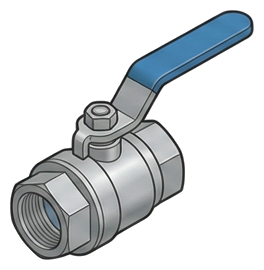
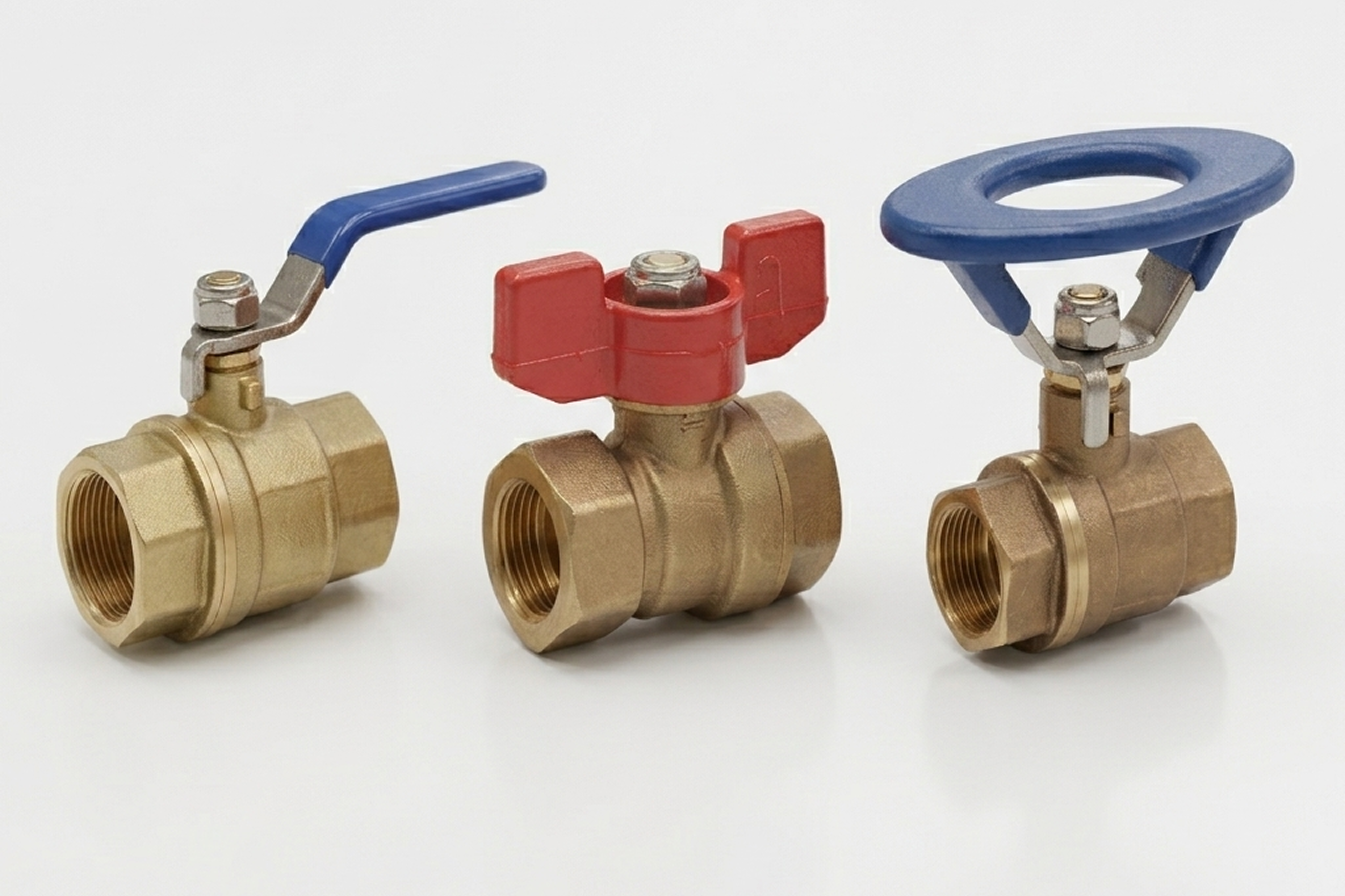
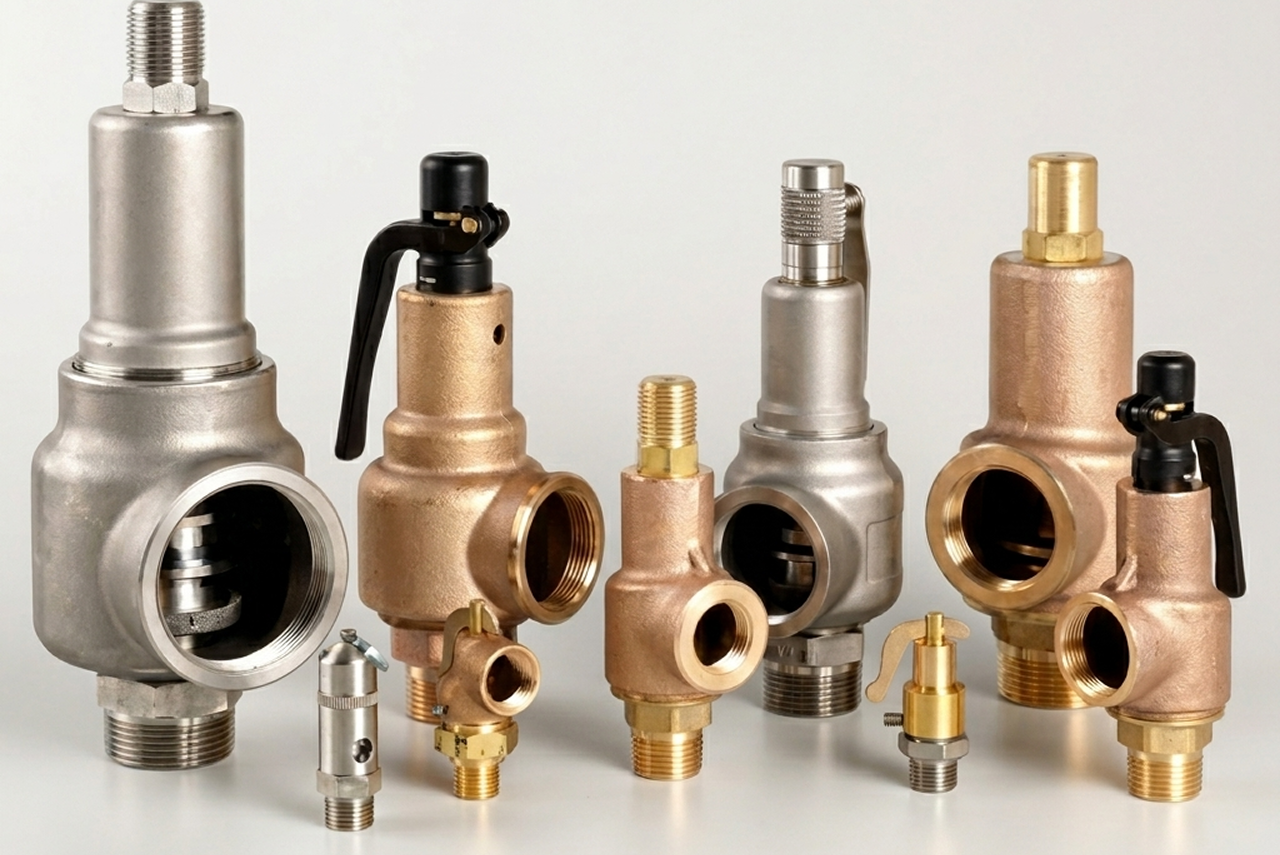
Pictorial Representative 1/4-turn shutoff valve
1/4-Turn Shutoff Valve — representative illustration
Real-world reference Representative 1/4-turn shutoff valve
1/4-Turn Shutoff Valve — representative product photo
Why it's needed

Why this matters.

When the quarter-turn shutoff is the right call, and when to spec something else. Review the points below.

01 · Key point
Isolates in one motion of a lever.

Quarter turn from open to closed; lever parallel = open, perpendicular = closed: unmistakable visually. Downstream vents safely to atmosphere for service while upstream stays pressurized. The cheapest insurance in compressed-air distribution.

02 · Key point
Padlock hole is the LOTO standard.

The hole in the lever accepts a standard OSHA padlock; the shutoff IS the lockout device at every machine drop, branch take-off, and isolation point. Confirm the lever has the hole (current product does); older inventory may not.

03 · Key point
One per drop, every drop.

Belongs upstream of every FRL, at every branch take-off from a header, at every instrument-air take-off, every drain leg. Most plants are dramatically under-equipped: the audit-and-quote pattern usually surfaces 10–50 missing across the plant.

04 · Pro tip
Match body material to environment.

Brass for general industrial air. Bronze for higher pressure or older specs. Stainless steel for washdown, food, pharma, corrosive, or outdoor. Brass in washdown corrodes within 6–12 months; the cost delta to stainless is modest, the failure cost is high.

05 · Where not to use
Automatic backflow blocking.

A shutoff is manual and bidirectional when open, it doesn't block reverse flow on its own. → Re-spec to check valve when the job is automatic one-way protection. The two often pair in series on compressor discharge lines (check + shutoff).

06 · Where not to use
Tunable flow throttling.

A ball valve is on/off, partial-open positions damage the seat over time and produce non-repeatable flow. → Re-spec to flow control valve when the job is bidirectional throttling, or to speed controller for one-direction cylinder throttling.

07 · Where not to use
Continuous-flow critical lines.

The body bore is typically slightly smaller than nominal (a 1/2" ball valve has roughly a 0.4" actual bore), creating pressure drop on continuous flow. → Spec one size up on critical continuous-flow lines; the shutoff is fine on occasional-service flow.

Key selection criteria

What we need to spec it right.

From the machine spec sheet to the part number. Answer what you know, leave the rest blank, and send.

Where it's used

Industries served.

Each industry below uses this product across the listed areas. Open an industry to see how it fits the rest of its system.

Also applies to Every machine drop in a working pneumatic plant · Branch take-offs from main headers · Instrument-air take-offs · Condensate drain legs · Aftercooler and dryer service isolation · Receiver tank drain and bypass · Compressor isolation · New installation and machine relocation

Install · 6 critical steps

The things that matter on the first install.

Step 01
Match size against the upstream piping diameter
The valve's nominal port size should equal the upstream pipe size. Undersized = restrictive flow even fully open. The body bore is typically slightly smaller than nominal (a 1/2" ball valve has roughly a 0.4" actual bore), acceptable on shutoff service where flow is occasional, but spec the next size up on continuous-flow critical lines.
Step 02
Plumb upstream of the FRL
The shutoff goes between the branch take-off and the FRL's inlet. The FRL's drain, gauge, and filter bowl are downstream of the shutoff so they can be serviced with the shutoff closed. Installing downstream of the FRL means the FRL itself cannot be serviced without isolating the entire branch upstream.
Step 03
Orient the lever for easy reach
The lever swings 90 degrees; install position should give the operator clear access to swing the lever without a ladder or removing adjacent equipment. Most ball valves allow the body to be rotated within the pipe threads before final tightening; verify orientation before locking the threads.
Step 04
Thread sealant by thread type
NPT = PTFE tape on the male thread, 2-3 wraps in the direction of engagement. BSPP seals on the face, no sealant on threads. Brass-to-brass or stainless-to-stainless joints are most reliable; mixed metal joints (brass valve on galvanized steel pipe) can have differential thermal expansion that loosens the joint over time, re-check torque on a temperature-cycled install at the 6-month service.
Step 05
Engage the padlock provision during commissioning if LOTO is required
Verify the lever has the padlock hole; verify the padlock fits (some older valves have an undersized hole). Document the lockout procedure for the maintenance team, most plants have a written LOTO procedure that references specific isolation points; add this shutoff to the procedure.
Step 06
Cycle fully open and fully closed during commissioning
Verify the lever moves smoothly through the full quarter turn and the closed position fully isolates downstream (downstream pressure should drop to zero when the shutoff is closed and the downstream is vented). Sticky levers usually indicate corrosion or install contamination, flush and re-test, or replace if it does not free up.
Troubleshoot · top failures

Most returns trace to one of these causes.

Symptom
Most likely cause
Fix
Lever sticks or is hard to turn
Corrosion inside the ball or stem (most common on brass in washdown), OR mineral scale from compressed air contamination, OR mechanical damage from someone using a pipe wrench on the lever (using the lever as a leverage tool is a no-no).
Work the lever gently through several partial cycles to try to free it. If it frees up, the valve is salvageable in low-criticality service but schedule replacement. If not, replace. Do not force a stuck lever with extension tools: broken stems are a sealing hazard.
Valve leaks through the body even when closed
Damaged ball seat (most common after years of service or after a single high-particulate event), OR damaged stem seal, OR cracked body (rare on quality products but possible with thermal cycling or freeze damage).
Almost never field-repairable on small commodity ball valves. Replace. If recurring failures at a specific location, check upstream air quality and confirm the valve material is appropriate.
Downstream pressure does not drop to zero when valve is closed
Valve not fully closed (lever stops short of 90 degrees), OR ball seat leaking, OR another supply path downstream that the shutoff isn't isolating.
Verify lever at exactly 90 degrees. If the seat is leaking, replace. If another supply path, trace the downstream plumbing, multi-supply branches need a shutoff on each supply.
Padlock won't fit the lever hole
Older valve with undersized lockout hole, OR the lock-and-tag combination is dimensionally larger than the valve's design accommodates.
Switch to a smaller padlock if possible, OR replace with current-product version with OSHA-standard hole size, OR use an external lockout cover that fits over the lever.
Brass valve corroded after less than a year in service
Wrong material for the environment. Brass corrodes in washdown, in chemical environments, and in some food/pharma environments where chlorine-based cleaning chemicals are used.
Replace with stainless steel. Brass-to-stainless cost delta is modest; long-term reliability and audit-cleanliness benefits are substantial.
Lever was hit and bent or broke off
Physical damage from a passing forklift, a swinging hoist load, or someone using the lever as a hand-hold to climb.
Replace. A bent lever can't be reliably operated; a broken-off stem is a contamination and sealing hazard. Consider relocating to a less-exposed position or adding a protective cage on future installs in high-traffic areas.

Get the right 1/4-turn shutoff valve on quote in 24 hours.

Send us the application — a specialist routes you to the correct tier with a configured part. Lead-times and pricing returned within one business day.

Open quote engine ↑