DISTRIBUTOR-FIRST SUPPLY PARTNER · SINCE 1999 Live · Compressed Air System
SPC Company
Compressed Air / Generation / Compressor Electrical Package / Magnetic Starter
Layer 01 · Generation Performance · Eaton
What it is

Magnetic Starter

Compare tiers ↓

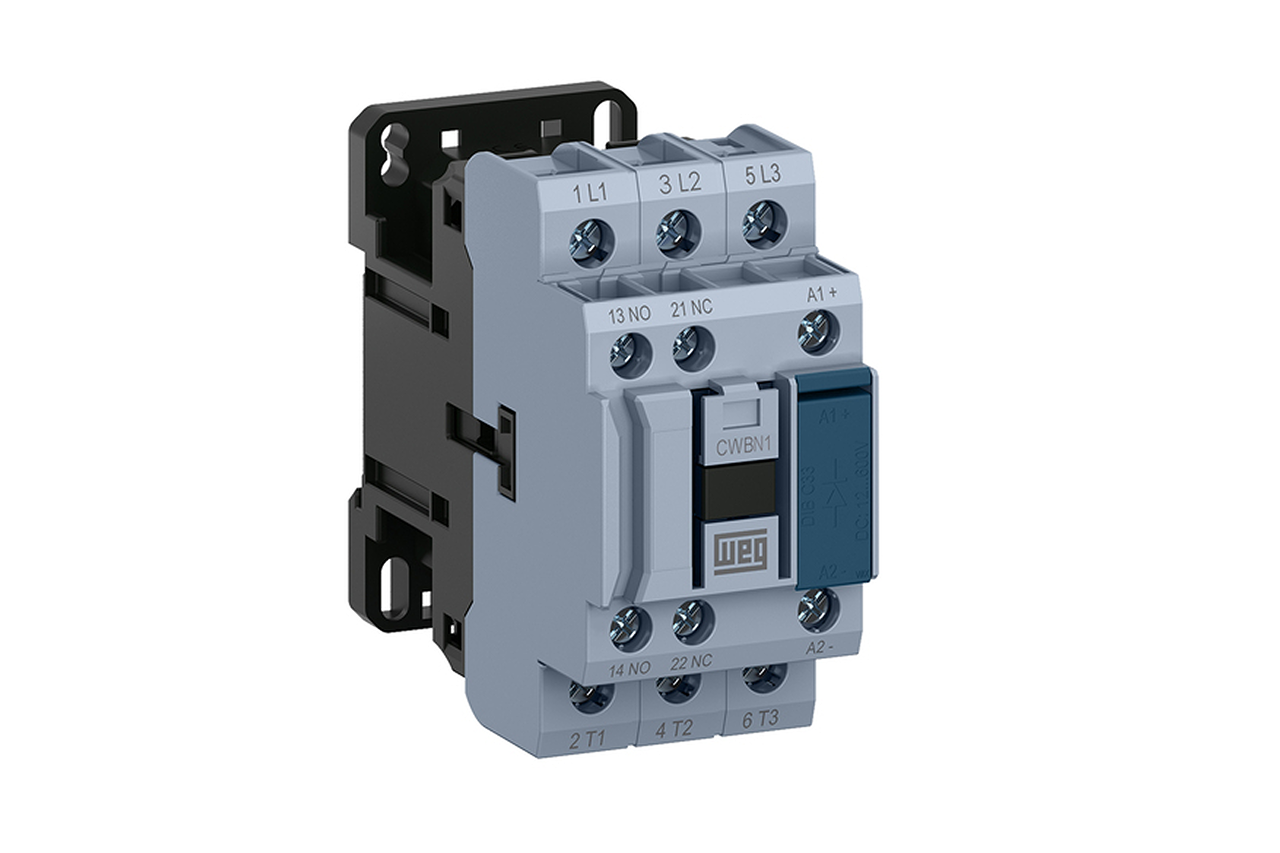
A magnetic starter is the switch-and-protect device for the compressor motor: an across-the-line (full-voltage) contactor that makes and breaks the line, bolted to an overload relay that watches motor current and trips before the windings cook. It lives in the Power & Drive layer, between the disconnect and the motor, and it does two jobs that matter equally: it starts and stops the motor (locally, or on a signal from a pressure switch or controller), and it protects the motor from sustained over-current and single-phasing. The one rule that governs every starter selection: the overload heaters / setting must match the motor nameplate full-load amps (FLA). Get that wrong and the starter either nuisance-trips a healthy motor or, far worse, lets an overloaded motor run until it burns. When a motor is replaced, the overloads have to be re-set to the new nameplate, or the starter replaced; a worn contactor or wrong overloads will kill the new motor.

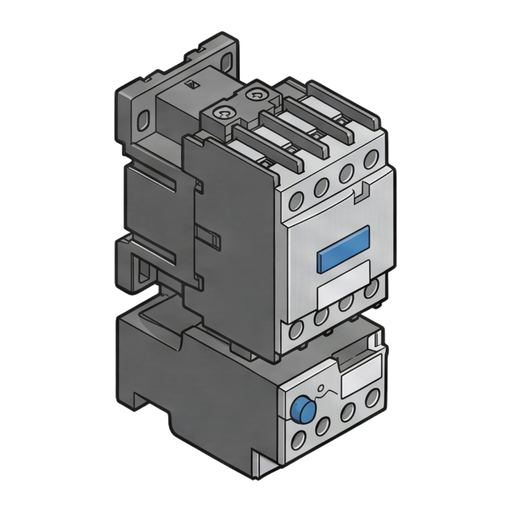
Pictorial Representative magnetic starter
Magnetic Starter — representative illustration
Real-world reference Representative magnetic starter
Magnetic Starter — representative product photo
Why it's needed

Why this matters.

When a magnetic starter is the right call, how to size the overloads, and where a wrong starter damages the motor. Review the points below.

01 · Key point
Overloads must match the nameplate FLA.

The overload heaters / setting have to bracket the motor nameplate full-load amps: not the breaker size, not the old setting. Too high and the motor burns before the overload trips; too low and a healthy motor nuisance-trips. This single number is the whole protection scheme.

02 · Key point
It protects against single-phasing.

Lose one of three phases, blown fuse, failed pole, broken lead, and the motor draws locked-rotor current on the rest and cooks in minutes. A working overload relay trips on the imbalance and saves the motor. A starter both switches power and protects the motor.

03 · Key point
NEMA sizing buys contact life.

A compressor cycles all day. NEMA-sized starters (00-9) rate to a conservative table and outlast IEC units under repeated starting. IEC is smaller and cheaper at the same HP, but for a hard-cycling compressor, the NEMA margin is the long-life choice.

04 · Pro tip
Replace the motor? Re-rate the starter.

A new motor almost always has a slightly different FLA. Dial the overloads to the NEW nameplate: or replace the starter if the contacts are pitted or the overload range no longer brackets the new FLA. A worn contactor or stale overload setting will take the new motor with it.

05 · Where it bites
Sizing the overload to the breaker.

The branch breaker protects the wire; the overload protects the motor: they are different numbers and different jobs. Set overloads off the breaker amps and the motor runs unprotected. → Always size overloads off the motor nameplate FLA.

06 · Where it bites
Wrong enclosure for the room.

A NEMA 1 starter on an outdoor compressor or in a washdown bay fills with moisture and corrodes the contacts; an open starter on a dusty floor pits the tips. → Match the enclosure: 3R outdoor, 4/4X washdown, 12 dust, so the starter survives where it hangs.

07 · Where it bites
Wrong coil voltage, it won't pull in.

The coil energizes on the control-circuit voltage. A 120 V coil on a line-voltage control scheme (or vice versa) simply won't pull the contactor in, or burns the coil. → Match the coil to the existing control voltage before quoting; confirm whether there's a control transformer.

Technologies within this type

Which technology — and when to choose it.

Same job, make the line, break the line, and trip on overload, but the sizing standard, the overload class, and the enclosure decide whether the starter protects the motor or quietly fails it. Match these to the motor and the room, along with the horsepower.

NEMA-sized vs IEC-sized

NEMA sizes (00-9) rate to a conservative HP/current table, over-built, long contact life, the North American replacement default. IEC starters rate to the exact application, so they run smaller and cheaper at the same HP but carry less margin under hard or frequent starting. For a compressor that cycles, NEMA buys you contact life.

Overload class (10 / 20 / 30)

Class sets how fast the overload trips at locked-rotor current. Class 10 (trip within 10 s at 600% FLA) is standard and protects most motors. Class 20/30 give a longer accelerate window for high-inertia or hard-starting loads; use them only when a motor needs the time, not to silence a nuisance trip that's really a sizing problem.

Coil voltage (120V / 24V / line-voltage)

The control-circuit voltage. 120 VAC is the packaged-compressor default (fed from a control transformer); 24 V is used where low-voltage control is required; line-voltage coil is the simplest wiring with no transformer but ties the control circuit to full line potential. Match the coil to the existing control scheme or the contactor won't pull in.

Enclosure rating (1 / 3R / 4-4X / 12)

NEMA 1 for a clean indoor electrical room; 3R for outdoor rain-tight; 4/4X for washdown and corrosive areas (4X stainless on food and chemical lines); 12 for dust-tight industrial. The wrong enclosure lets moisture, dust, or wash spray into the contacts and the starter fails early. Match the rating to where it actually hangs.

Key selection criteria

What we need to spec it right.

From the machine spec sheet to the part number. Answer what you know, leave the rest blank, and send.

04Choose your priority  ·  core differentiator

Whatever your lever — performance, value, or price — SPC has the right brand.

Pick the priority; the quote desk handles the cross-reference.

01 Performance 4 brands
Where it's used

Industries served.

Each industry below uses this product across the listed areas. Open an industry to see how it fits the rest of its system.

Also applies to Compressor rooms, replacement and re-rate · Reciprocating packages, pressure-switch started · Rotary-screw packages, controller started · Outdoor, washdown, and dusty installs · Distributor counter & RFQ work

Install · 6 critical steps

The things that matter on the first install.

Step 01
Confirm the motor nameplate FLA before anything else
The overload heaters / setting must bracket the motor full-load amps on the nameplate, the new nameplate if the motor was just replaced. This is the protection. Everything else on the starter is secondary to getting this number right.
Step 02
Verify coil voltage against the control circuit
Confirm whether the package has a control transformer (typically 120 V) or runs line-voltage control. The coil has to match or the contactor won't pull in, or the coil burns. Check before energizing.
Step 03
Land the power and control wiring, set the seal-in
Line to L1/L2/L3, load to T1/T2/T3, control to the coil through the start/stop and the holding (seal-in) auxiliary contact. On a packaged compressor the start signal usually comes from the pressure switch or controller, wire it into the control circuit, not across the power poles.
Step 04
Dial in the overload and set the class
Set the overload dial / select the heater to the motor nameplate FLA. Confirm the overload class suits the load; Class 10 for most motors, Class 20/30 only for high-inertia or hard-starting loads. Don't bump the class up to silence a nuisance trip that's really a sizing problem.
Step 05
Confirm enclosure seal and mounting
Verify the enclosure rating suits the room (1 indoor, 3R outdoor, 4/4X washdown, 12 dust) and that gaskets and gland fittings are seated so the rating actually holds. A NEMA 4X box with an unsealed knockout is a NEMA 1 box.
Step 06
Test-start, verify pull-in and protection
Bump the motor, confirm the contactor pulls in cleanly and seals, and verify rotation matches the airend / pump arrow. After commissioning, trip-test the overload reset path so you know the protection actually functions, a starter that won't trip is worse than no starter.
Troubleshoot · top failures

Most returns trace to one of these causes.

Symptom
Most likely cause
Fix
Overload trips on start or under load
Overloads set wrong for the nameplate FLA (most common after a motor swap), supply voltage low or unbalanced, mechanical bind in the compressor, or an undersized starter for the motor.
Verify the overload setting matches the NEW motor nameplate FLA, not the old setting, not the breaker. Measure voltage on all three phases at the motor under load; low or unbalanced supply mimics an overload fault. Rule out a seized airend or over-tensioned belts before replacing the starter.
Contactor chatters or won't pull in
Wrong or failing coil, low control voltage, a failed seal-in (holding) auxiliary contact, or a control-transformer problem.
Confirm the coil voltage matches the control circuit and measure the actual control voltage at the coil. Check the seal-in aux contact and the start/stop circuit. Replace the coil or the starter if the coil is burned.
Contacts pitted, welded, or burned
Normal end-of-life from repeated arcing, or accelerated wear from undersizing, hard cycling, or an IEC starter on a load that needed NEMA margin. Welded tips can no longer break the line.
Replace the starter (or the contact kit where the line supports it). If contacts are wearing fast, step up to a NEMA size or a higher utilization category for the cycling rate. Welded contacts are a safety issue; the line can't be opened.
Motor hums, then trips (single-phasing)
One phase lost, blown fuse, broken lead, or a failed / pitted contactor pole that isn't making. The motor can't develop starting torque and draws locked-rotor current on the remaining phases.
Check for voltage on all three phases on both sides of the contactor. A pole that has line voltage in but nothing out is a failed contact, replace the starter. Confirm the overload relay has working single-phasing / phase-loss protection so it trips before the motor cooks.
New motor burned out shortly after a swap
The old starter's overloads were never re-rated to the new nameplate FLA, or a worn contactor single-phased the new motor. The starter killed the new motor.
On any motor replacement, re-rate the overloads to the new nameplate FLA and inspect the contacts, replace the starter if the tips are pitted or the overload range no longer brackets the new FLA. Standard practice: quote a fresh starter with every motor.

Get the right magnetic starter on quote in 24 hours.

Send us the application — a specialist routes you to the correct tier with a configured part. Lead-times and pricing returned within one business day.

Open quote engine ↑