DISTRIBUTOR-FIRST SUPPLY PARTNER · SINCE 1999 Live · Compressed Air System
SPC Company
Compressed Air / Generation / Compressor Electrical Package / Soft Starter
Layer 01 · Generation Performance · WEG
What it is

Soft Starter

Compare tiers ↓

A soft starter is a reduced-voltage solid-state starter: it sits in the Power & Drive layer in place of an across-the-line magnetic starter and ramps voltage to the motor up over a few seconds instead of slamming full line voltage on at once. That ramp cuts inrush current (a hard across-the-line start draws 6-8× full-load amps), the mechanical shock on belts, couplings, and the airend, and the voltage dip the start throws onto the building feed. It is the middle option between the two ends of the starting spectrum: a magnetic starter is the cheapest and hardest on the system, a VFD gives full speed control and costs the most, and the soft starter buys a gentle start without paying for variable speed. It does not control running speed, once the ramp finishes the motor is at full line speed and full output. If the customer needs to trim output to demand, that is a VFD, not a soft start.

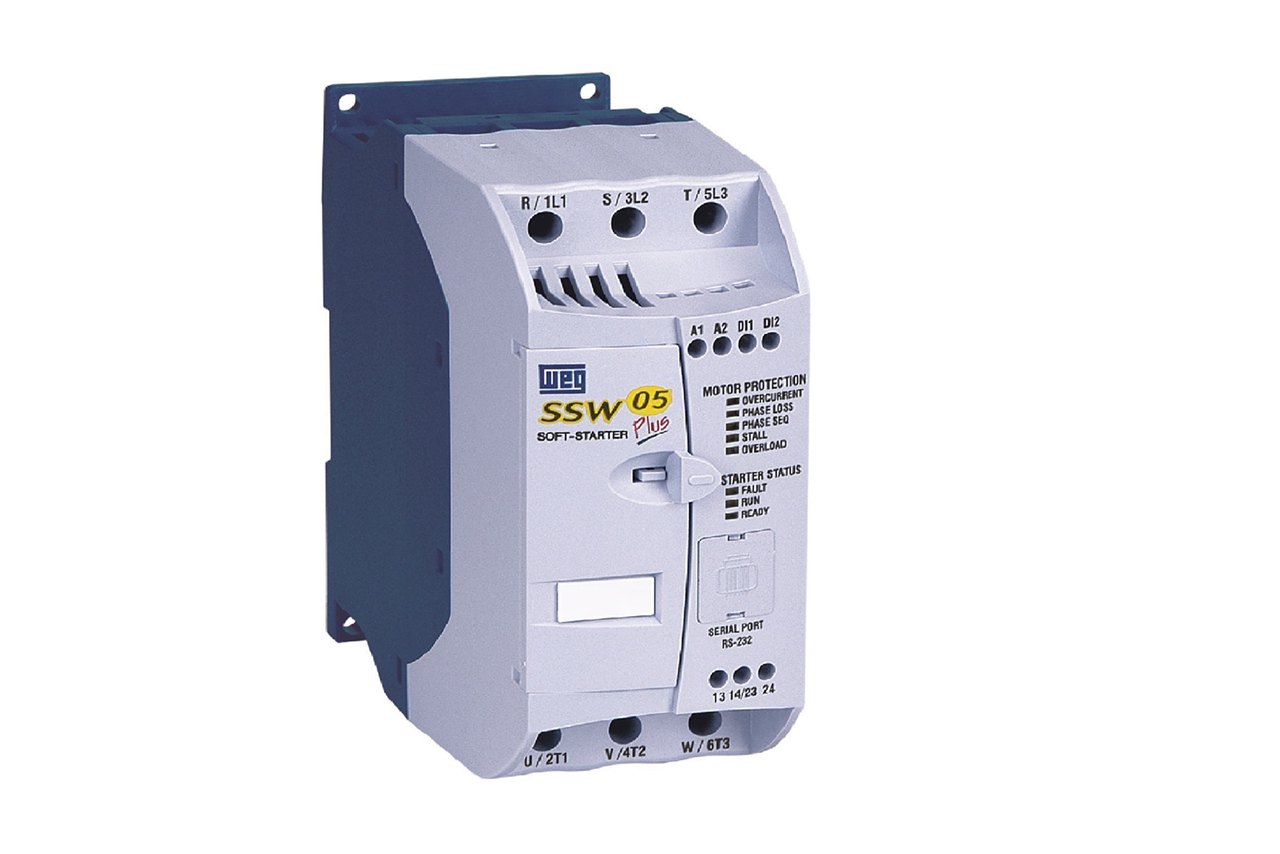
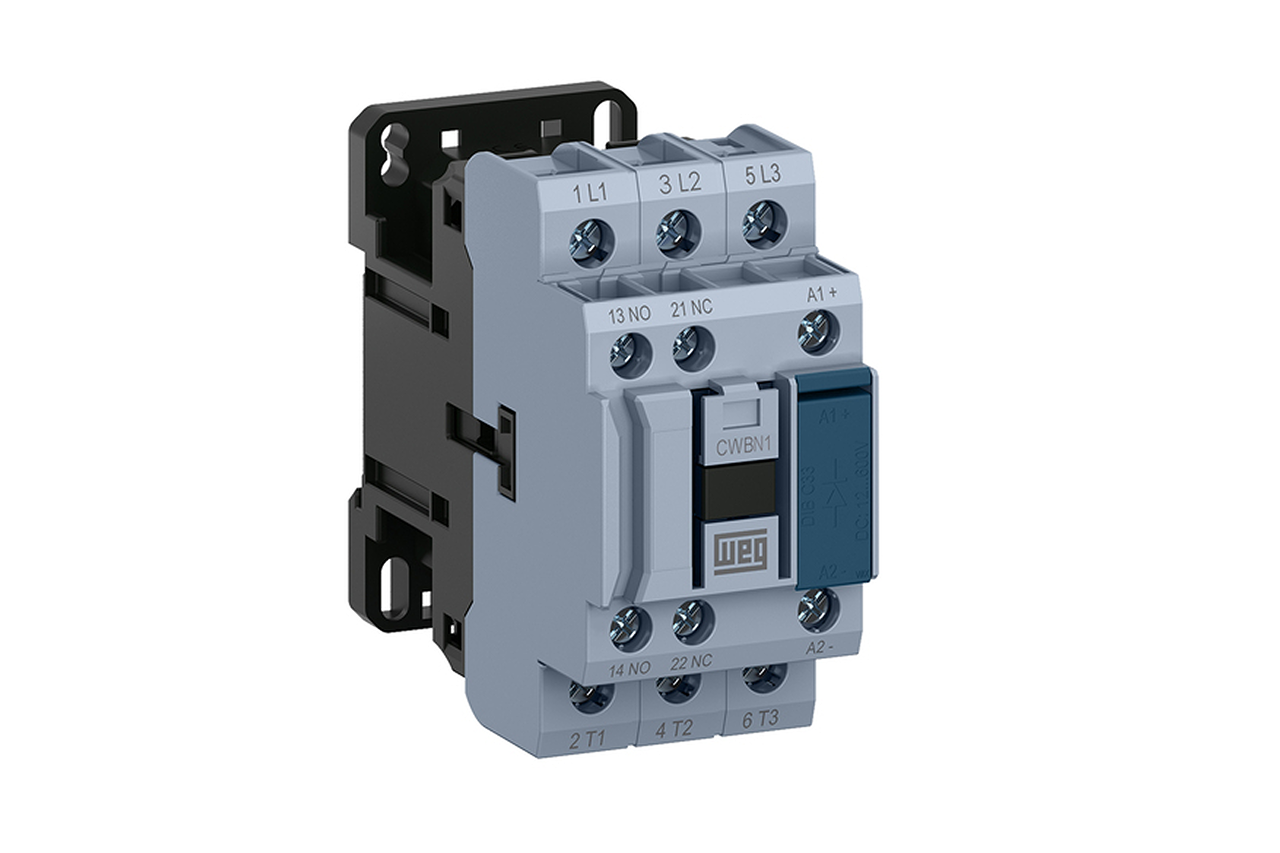
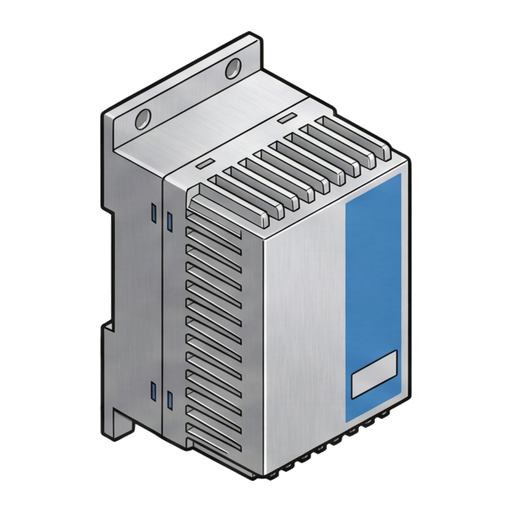
Pictorial Representative soft starter
Soft Starter — representative illustration
Real-world reference Representative soft starter
Soft Starter — representative product photo
Why it's needed

Why this matters.

When a soft starter is the right call, where it sits between a magnetic starter and a VFD, and where it will not solve the problem. Review the points below.

01 · Key point
It kills the inrush and the shock.

An across-the-line start draws 6-8× full-load amps and slams the airend, belts, and couplings. The soft starter ramps voltage up over a few seconds, lower inrush, less mechanical hit, smaller voltage dip on the building feed. The gentle start without paying for a drive.

It is the middle option, on purpose.
02 · Key point

Magnetic starter is cheapest and hardest on the system; a VFD gives full speed control and costs the most. The soft starter sits between them, a gentle start at a fraction of a drive''s cost. Quote it when the start is the problem and speed control is not the goal.

03 · Key point
Bypass models run cool.

A bypass-contactor soft starter closes an internal contactor once the ramp ends, so the SCRs stop conducting and the unit runs cool on continuous duty, the compressor-room standard. Continuous (non-bypass) units keep conducting and need the heatsink airflow and thermal headroom to match.

04 · Pro tip
Lead with the trigger, then size to FLA.

Quote a soft start when one of three things is true: a larger motor, a weak or long feed, or an across-the-line start that trips or shocks the drive. Then size the starter to bracket the motor FLA with margin, and set ramp time and initial torque to break the load away gently.

It is not speed control.
05 · Where it bites

Once the ramp finishes the motor is at full line speed and full output: a soft starter cannot trim air output to demand. → If the customer wants to vary output to match a swinging load, that is a VFD, full stop. Selling a soft start into a demand-modulation problem is a callback.

06 · Where it bites
Small motor on a stiff supply.

On a small motor with a healthy feed there is nothing for a soft starter to fix, and it costs more than the magnetic starter that would do the job. → Below ~10 HP, or where across-the-line starting causes no trips and no shock, quote the magnetic starter instead.

07 · Where it bites
Starved of cooling air.

A soft starter rejects heat through a heatsink, and continuous (non-bypass) units run hotter still. Blocked vents or a tight panel and it derates or trips on over-temp. → Confirm cooling clearance and ambient, and quote a bypass model for continuous compressor duty.

Technologies within this type

Which technology — and when to choose it.

All three put a motor on the line, but the gentleness of the start and whether you get speed control decide which one fits. Soft start is the middle option; match it to the supply and the driven load, along with the HP.

Across-the-line magnetic starter

Slams full line voltage on at once, 6-8× FLA inrush and a hard mechanical hit. Cheapest and simplest, and correct on small motors and stiff supplies. When the start trips the breaker, dips the building, or shocks the belts, it has run out of road.

Soft starter (this product)

Ramps voltage up over a few seconds to cut inrush, mechanical shock, and voltage dip, then runs at full speed. The fix for larger motors, weak or long feeds, and across-the-line starts that trip or shock the drive. No speed control, full output once the ramp ends.

VFD / variable-speed drive

Full speed control, varies motor output to match demand and starts soft as a side effect. The costliest option and the right one only when the application needs to modulate output. If all the customer needs is a gentle start, the soft starter does it for less.

Bypass-contactor vs continuous

Bypass models close an internal contactor after the ramp so the SCRs stop conducting and the unit runs cool, the continuous-compressor-duty standard. Continuous (non-bypass) models keep conducting and need the heatsink airflow and thermal headroom to match.

Key selection criteria

What we need to spec it right.

From the machine spec sheet to the part number. Answer what you know, leave the rest blank, and send.

04Choose your priority  ·  core differentiator

Whatever your lever — performance, value, or price — SPC has the right brand.

Pick the priority; the quote desk handles the cross-reference.

01 Performance 1 brand
Where it's used

Industries served.

Each industry below uses this product across the listed areas. Open an industry to see how it fits the rest of its system.

Also applies to Larger compressor motors on weak feeds · Long supply runs and soft utility feeds · Belt-drive and direct-coupled packages taking mechanical shock · Multi-compressor rooms · Distributor counter & RFQ work

Install · 6 critical steps

The things that matter on the first install.

Step 01
Confirm the motor FLA and voltage before it ships
The soft starter rating must bracket the motor full-load amps with margin, and the voltage and phase must match the running supply, not the old starter's label. A starter under-rated for the FLA will trip; a voltage mismatch is a one-start failure.
Step 02
Wire the bypass and overload correctly
On a bypass-contactor model, confirm the internal contactor is wired to close on ramp-complete so the SCRs drop out and the unit runs cool. Set the built-in solid-state overload to the motor nameplate FLA so motor protection actually works.
Step 03
Set ramp time and initial torque to the load
Start with a moderate ramp and an initial torque / current limit high enough to break the load away, then tune: too low and the motor stalls or the ramp drags and overheats the SCRs; too high and you have given back the gentle start. Unloaded starts need less initial torque than loaded ones.
Step 04
Verify cooling clearance and ambient
The unit rejects heat through a heatsink; keep the manufacturer's clearance around the vents, and on continuous (non-bypass) units make sure panel ventilation matches the thermal rating. A starter in a sealed corner derates and trips on over-temp.
Step 05
Verify rotation and watch the first starts
Confirm shaft rotation matches the airend / pump arrow before coupling the load. Then watch the first few starts; confirm the start indicator and the bypass close on ramp-complete, and that the start current and ramp profile actually suit the supply with no breaker trip or deep voltage dip.
Step 06
Keep the vents clear on the service plan
Most soft-starter failures are SCR or control-board faults, and heat drives them. Document on the customer's MRO plan to keep the cooling vents and heatsink clear so the unit holds its thermal rating, and to confirm fault codes clear on each start.
Troubleshoot · top failures

Most returns trace to one of these causes.

Symptom
Most likely cause
Fix
Soft starter trips during the ramp
Initial torque / current limit set too low to break the load away, ramp time too short for the inertia, the start current limit set under what the load needs, or a genuine mechanical bind in the driven equipment.
Raise the initial torque / current limit and lengthen the ramp time toward what the load needs. Rule out a seized airend or over-tensioned belts before re-tuning. Confirm the starter is sized to bracket the motor FLA, an under-rated frame trips under a normal start.
Unit runs hot or trips on over-temperature
Blocked cooling vents or insufficient clearance, a continuous (non-bypass) unit on duty that needs a bypass model, high ambient in the panel or compressor room, or a bypass contactor that is not closing on ramp-complete so the SCRs keep conducting.
Clear the vents and confirm clearance and ambient. On a bypass model, verify the contactor closes at ramp-complete (SCRs should stop conducting). If the duty is continuous and the unit is non-bypass, re-spec to a bypass-contactor model.
Motor starts hard / stalls / hums during ramp
Initial torque too low for the load, or one phase weak or lost so the motor cannot develop starting torque, or a feed too weak for even the ramped start current.
Raise initial torque and confirm voltage on all three phases at the starter under start. Measure the supply at the starter during the ramp, a long or weak feed may need the ramp current re-profiled, and is exactly the case the soft start is meant to handle.
SCR or control-board fault code on start
SCR failure (often heat-driven), control-board fault, or a sustained overheating condition that has degraded the power section.
Read the fault code against the manufacturer's table. A failed SCR or control board is a replacement, not a field repair, and address the heat that caused it (clear vents, confirm bypass closes, check ambient) so the replacement does not fail the same way.
Customer reports it "won't slow the compressor down"
Expectation mismatch, a soft starter ramps the start only; once running the motor is at full line speed and full output. It was sold or specified where the customer actually wanted demand modulation.
Confirm the requirement. If they need to vary output to demand, the correct part is a VFD, not a soft starter. The soft start is doing exactly what it is built to do.

Get the right soft starter on quote in 24 hours.

Send us the application — a specialist routes you to the correct tier with a configured part. Lead-times and pricing returned within one business day.

Open quote engine ↑